
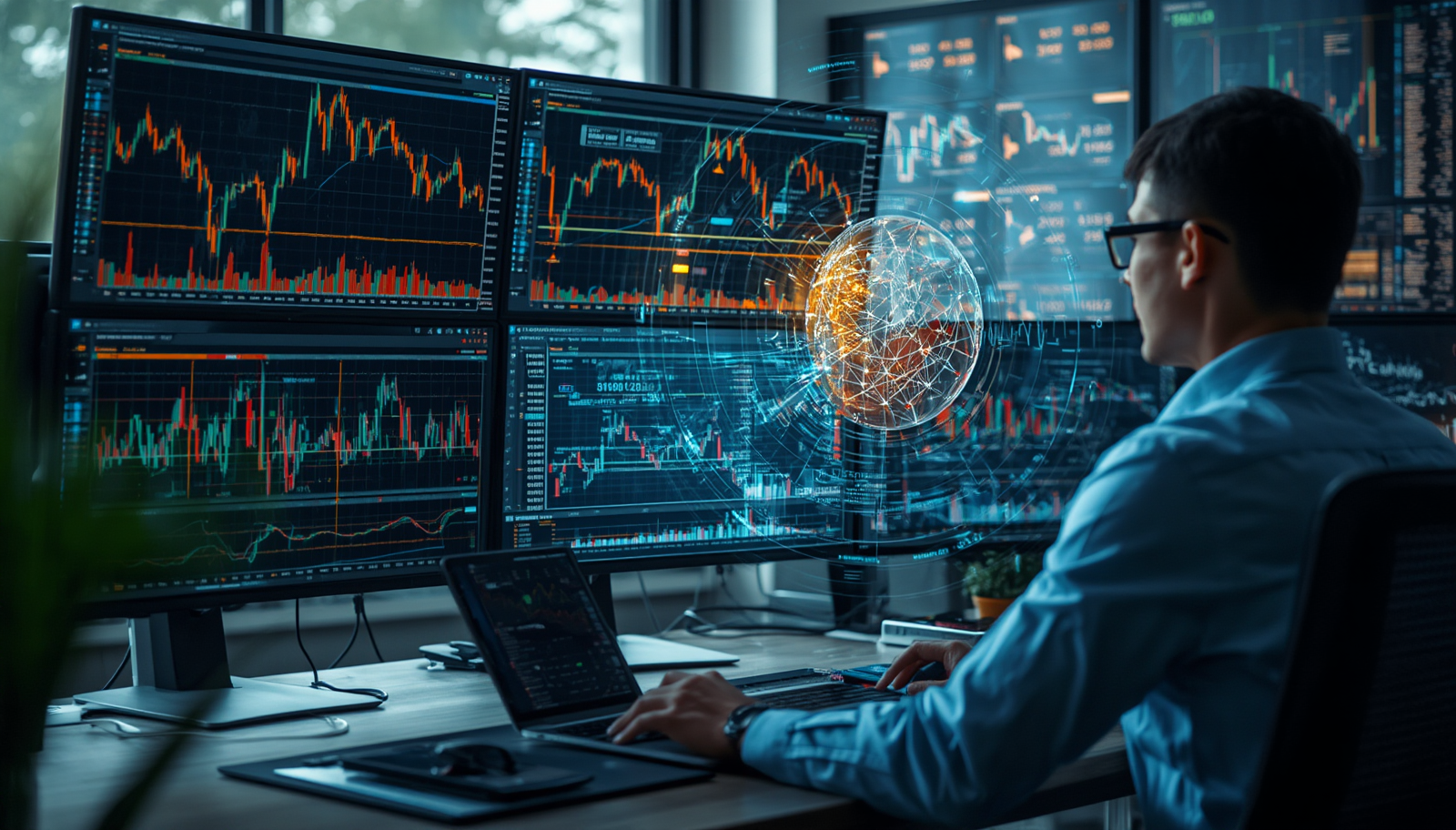
The cryptocurrency market never sleeps. It operates 24 hours a day, seven days a week, generating huge amounts of data every second. For human traders, keeping up with all that information can be overwhelming. Artificial Intelligence (AI) is helping solve this problem by processing large datasets in real time, spotting market patterns, analyzing potential price movements, and automating parts of the trading process.
Whether you are new to cryptocurrency or already have experience trading digital assets, understanding how AI is changing the industry can help you make better-informed decisions in an increasingly technology-driven market.
What Is Artificial Intelligence in Crypto Trading?
Artificial Intelligence in crypto trading refers to computer-based systems that can analyze market information and assist with trading decisions. These systems use technologies such as machine learning, deep learning, natural language processing, and predictive analytics to process information much faster than a person could manually.
Traditional trading software usually follows a fixed set of instructions. AI systems can go a step further by learning from historical and real-time data and adjusting their analysis as market conditions change.
This ability to process information and recognize patterns makes AI an increasingly useful tool for cryptocurrency traders.
Why AI Is Becoming Important for Crypto Traders
Cryptocurrency prices can be influenced by many different factors, including investor sentiment, economic developments, blockchain updates, institutional activity, and regulatory changes.
Trying to monitor all of these factors manually can take a considerable amount of time. AI systems can analyze thousands of data points simultaneously and highlight relationships or patterns that might otherwise be difficult to notice.
Instead of spending hours switching between charts, news reports, and market data, traders can use AI-powered tools to organize information and generate useful insights more efficiently.
However, AI should support a trading strategy rather than replace careful research and human judgment.
AI Improves Market Analysis
One of AI’s biggest strengths is its ability to handle enormous amounts of market information.
AI systems can analyze historical prices, trading volume, volatility, liquidity, technical indicators, and blockchain activity at the same time.
Rather than looking at each factor separately, these systems can examine how multiple variables interact and identify patterns that may be relevant to a trading strategy.
This can make market research faster and more systematic while reducing some of the emotional bias that often affects manual trading.
Machine Learning and Trading Strategies
Machine learning is a major part of modern AI technology. It allows computer systems to learn from data and improve their analysis as they process more information.
In cryptocurrency trading, machine learning models can examine historical market behavior to identify recurring patterns and relationships.
As new data becomes available, these models can be updated and tested against changing market conditions.
This flexibility gives machine learning an advantage over systems that depend entirely on fixed rules. However, changing market conditions can still reduce the accuracy of any model, so traders should avoid assuming that past performance will automatically continue in the future.
AI-Powered Trading Bots
AI-powered trading bots are one of the most visible applications of artificial intelligence in cryptocurrency markets.
These automated systems can monitor markets continuously and execute buy or sell orders according to programmed strategies and AI-generated signals.
Unlike human traders, automated systems do not need to sleep or take breaks. They can monitor markets overnight and respond quickly when specific conditions occur.
AI trading bots can also reduce emotional reactions by following predefined rules instead of making decisions based on fear, excitement, or panic.
That does not mean they are risk-free. Poorly designed strategies, incorrect settings, technical problems, or unusual market conditions can still lead to significant losses. Proper testing, monitoring, and risk management remain essential.
Predictive Analytics in Cryptocurrency Trading
Predictive analytics uses historical and current information to estimate what might happen in the future.
In cryptocurrency markets, AI models can examine price history, technical indicators, blockchain data, market sentiment, and broader economic information to identify possible future scenarios.
These predictions can help traders evaluate potential opportunities and risks, but they should never be treated as guarantees.
Cryptocurrency markets can react unexpectedly to breaking news, regulatory announcements, security incidents, or sudden changes in investor behavior. Even sophisticated AI models can struggle when they encounter conditions that were not represented in their training data.
AI-Based Sentiment Analysis
Investor sentiment can have a major impact on cryptocurrency prices.
AI can use natural language processing to examine news articles, social media discussions, online communities, public announcements, and other sources of market commentary.
By processing large volumes of information quickly, AI systems can estimate whether sentiment is becoming more positive or negative.
For example, a sudden increase in negative discussions surrounding a cryptocurrency may indicate growing concern among investors. Similarly, a wave of positive attention may signal increasing optimism.
Sentiment analysis can provide useful context, but traders should verify important information rather than relying entirely on automated interpretations.
AI Can Reduce Emotional Trading
Emotions are among the biggest challenges faced by cryptocurrency traders.
Fear can cause investors to sell too quickly, while greed may encourage them to take excessive risks. Sudden price movements can also lead to impulsive decisions.
AI-based systems can help reduce these emotional reactions by following objective rules and analyzing data instead of responding to market excitement.
For traders, this can create a more consistent decision-making process.
Still, AI itself does not replace discipline. Traders must decide how much risk they are willing to accept and when an automated strategy should be stopped or adjusted.
Smarter Risk Management
Finding profitable opportunities is only one part of successful trading. Managing potential losses is equally important.
AI systems can monitor factors such as market volatility, portfolio exposure, liquidity, and open positions. Depending on the platform, they may also help traders evaluate position sizes, stop-loss levels, and concentration risk.
For example, an AI system may identify that too much capital is concentrated in one cryptocurrency or that market volatility has increased significantly.
These insights can help traders make more informed risk-management decisions and protect their capital.
AI Detects Market Patterns Quickly
Financial markets often contain patterns that are difficult to identify manually, particularly when thousands of assets and data points are involved.
AI can scan large datasets to identify changes in price behavior, unusual trading volume, correlations between assets, and developing trends.
This ability to recognize patterns quickly can help traders investigate potential opportunities earlier.
However, recognizing a pattern does not necessarily mean predicting the correct outcome. A pattern that worked previously can fail when market conditions change.
Personalized Trading Assistance
AI-powered platforms are increasingly capable of providing more personalized analysis.
Some systems can evaluate a trader’s previous activity, preferred assets, risk level, and trading style to highlight possible strengths and weaknesses.
For example, an AI assistant might identify that a trader frequently enters positions too late, takes excessive risk, or performs better with certain types of setups.
Used properly, this type of feedback can help traders improve their process and become more aware of recurring mistakes.
Institutional Adoption of AI
AI is no longer limited to individual cryptocurrency traders.
Large financial institutions, investment firms, hedge funds, and professional trading organizations use advanced technology to analyze markets, manage portfolios, assess risk, and automate certain trading activities.
The growing use of AI across the financial industry highlights the increasing importance of data-driven analysis.
At the same time, many AI-powered tools are becoming accessible to individual traders, giving smaller investors access to analytical capabilities that were once largely limited to professional organizations.
Challenges and Limitations of AI
Despite its advantages, AI is not a magic solution for cryptocurrency trading.
The quality of an AI system depends heavily on the quality of the data it receives. Incomplete, inaccurate, outdated, or biased data can produce unreliable results.
AI models can also struggle with unexpected events. A sudden regulatory announcement, geopolitical crisis, exchange failure, or major security incident may create market conditions that historical data cannot adequately predict.
There is also the risk of over-relying on automated recommendations. Traders who blindly follow AI signals may overlook important information that requires human judgment.
For these reasons, AI should be treated as a supporting tool rather than a guaranteed path to profits.
The Future of AI in Crypto Trading
Artificial Intelligence is likely to play an even larger role in cryptocurrency markets as technology continues to develop.
Future systems may offer more advanced predictive analytics, deeper blockchain analysis, improved fraud detection, stronger portfolio management, and more sophisticated automation.
Developments in machine learning, blockchain technology, and other advanced computing technologies could further improve how financial data is analyzed.
As these tools become more accessible, AI may eventually become a standard part of cryptocurrency research and trading rather than something used only by advanced traders and institutions.
Best Practices for Using AI in Crypto Trading
The most effective way to use AI is to treat it as a decision-support tool.
Traders should combine AI-generated insights with technical analysis, fundamental research, market awareness, and proper risk management. Important decisions should not be based on a single AI prediction or automated signal.
It is also important to test AI-based strategies before committing significant capital. Reviewing performance regularly can reveal when a strategy is no longer working as expected.
Most importantly, traders should understand the basics of cryptocurrency markets before relying heavily on automated technology. Knowing how a strategy works makes it easier to recognize both its strengths and its limitations.
.