
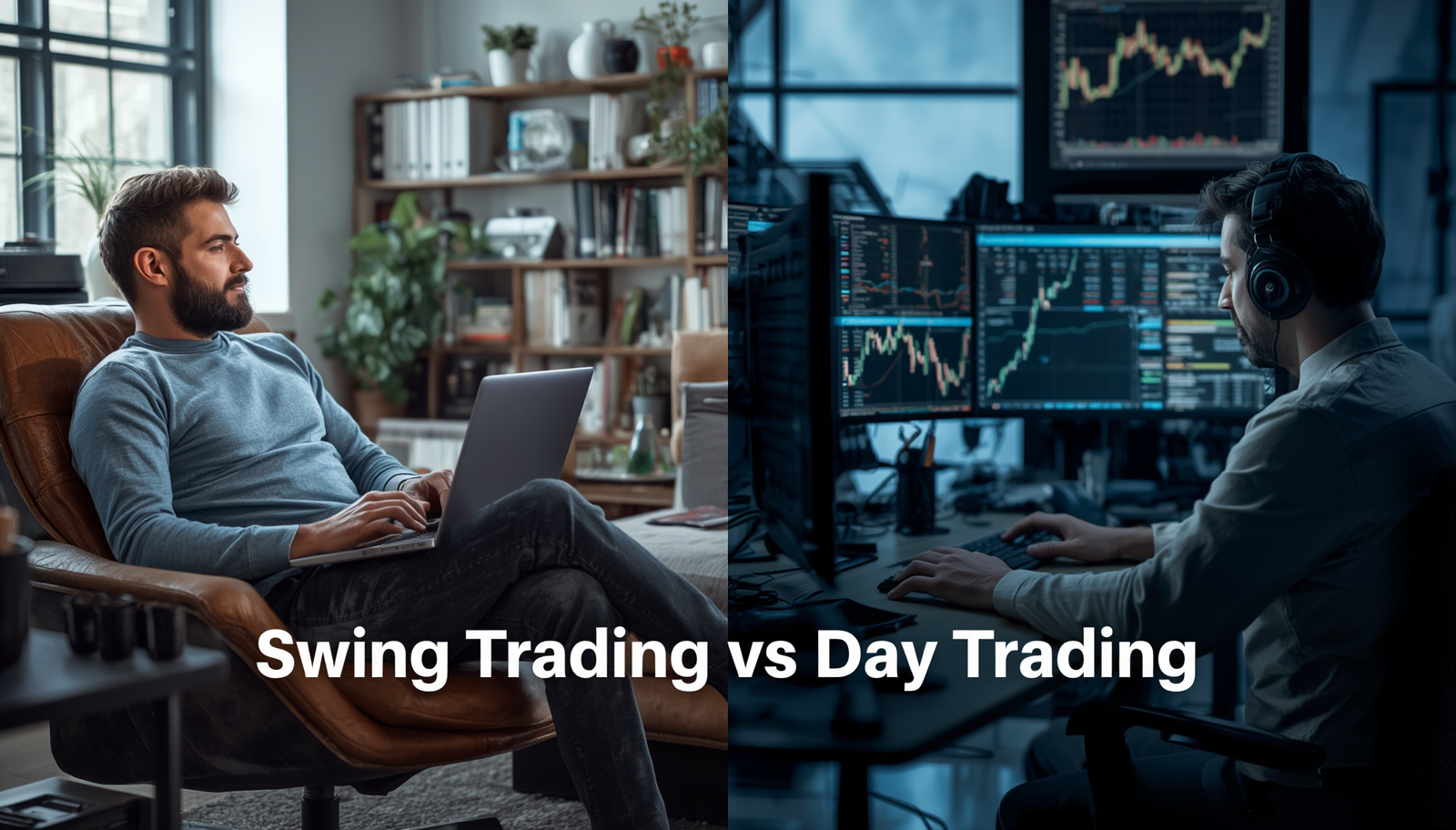
Choosing a trading style isn’t simply about deciding which strategy can make the most money. The right approach should also fit your schedule, personality, experience level, risk tolerance, and financial goals.
Two of the most popular approaches are day trading and swing trading. Both can provide opportunities, but they require very different levels of time, attention, and emotional control.
In 2026, modern trading platforms, real-time data, and AI-powered tools have made it easier than ever to access financial markets. But having better technology doesn’t automatically make trading easier or more profitable.
Before putting your money at risk, it’s important to understand how day trading and swing trading differ and which one makes more sense for your lifestyle.
Understanding Day Trading
Day trading involves opening and closing trades within the same trading session.
Day traders don’t normally hold positions overnight. Instead, they try to take advantage of short-term price movements that may develop over minutes or hours.
Depending on the market, a day trader might use stocks, forex, cryptocurrencies, commodities, or indices.
Because individual price movements can be relatively small, day traders may take several positions during a single session. This requires constant attention, quick decision-making, and the ability to follow a trading plan under pressure.
Understanding Swing Trading
Swing trading takes a slower approach.
Instead of trying to profit from short-term movements within one session, swing traders aim to capture price swings that can develop over several days or weeks.
Positions are usually held overnight and may remain open for an extended period if the market continues to support the original trade idea.
Swing traders often rely on technical analysis, market trends, support and resistance, and momentum. They may also consider economic announcements and broader market sentiment.
Because trades don’t need to be monitored every minute, swing trading can be more practical for people who have jobs, businesses, studies, or other daily responsibilities.
Time Commitment
The amount of time you’re able to dedicate to trading is one of the biggest factors to consider.
Day trading can require several uninterrupted hours of attention. Traders need to monitor charts, watch price movements, track news, and react quickly when opportunities appear.
Swing trading usually requires much less screen time.
A swing trader might analyze the market before or after work, identify potential setups, place orders, and check positions periodically.
If you have a full-time job or a busy schedule, swing trading may fit more naturally into your routine.
Trading Frequency
Day traders can execute several trades in a single day. The exact number depends on their strategy and market conditions.
Swing traders usually take fewer trades because they are waiting for larger and more developed setups.
This difference can affect both trading costs and emotional pressure.
Taking fewer trades doesn’t necessarily mean earning less. A swing trader may aim to capture a larger move from one position instead of repeatedly targeting small intraday price changes.
Risk Exposure
Both strategies carry risk, but they expose traders to different types of uncertainty.
Day traders generally close all positions before the market session ends, which reduces their exposure to overnight events.
Swing traders don’t have that protection.
A company earnings announcement, economic report, geopolitical development, or unexpected market event can occur while a swing trade is open. The next market session may then begin at a significantly different price.
This is known as gap risk.
Swing traders often account for this by carefully selecting position sizes and setting realistic risk levels.
Profit Potential
Neither day trading nor swing trading automatically produces better returns.
Day traders generally look for smaller price movements and may attempt to build profits through multiple trades.
Swing traders typically target larger moves and may hold positions for several days or weeks.
A single successful swing trade can potentially produce a larger percentage gain than an individual day trade, but it may also take much longer to reach the target.
Ultimately, profitability depends more on the quality of the strategy, risk management, discipline, and execution than on the trading style itself.
Stress Levels
Day trading can be mentally intense.
Prices can move quickly, and traders may have only seconds or minutes to make decisions. Watching the market continuously can also create emotional fatigue.
Swing trading is generally slower.
Because traders use higher timeframes and have more time to evaluate their decisions, there may be less pressure to react immediately.
This doesn’t mean swing trading is stress-free. Watching an open position move against you overnight can still be uncomfortable.
However, many people find the slower pace easier to manage emotionally.
Capital Requirements
The amount of capital required depends heavily on the market, broker, regulations, leverage, and trading strategy.
Day traders may face higher trading costs because they execute positions more frequently. Margin requirements can also be relevant depending on the market.
Swing traders generally make fewer transactions, which can reduce trading costs.
Regardless of the strategy, the most important rule is not to risk money you cannot afford to lose.
A larger account doesn’t automatically make someone a better trader, and a smaller account doesn’t guarantee smaller losses. Proper position sizing and risk control matter much more.
Technical Analysis
Technical analysis is important for both trading styles, but the timeframes are different.
Day traders often focus on shorter charts, such as one-minute, five-minute, or fifteen-minute intervals, depending on their strategy.
Swing traders typically look at four-hour, daily, or weekly charts to identify larger trends and important price levels.
Both can use tools such as moving averages, support and resistance, trendlines, volume, candlestick patterns, and momentum indicators.
The difference is mainly in how these tools are interpreted and how long the trader expects a position to remain open.
Lifestyle Compatibility
Your lifestyle should be one of the biggest factors when choosing a trading strategy.
If you enjoy fast-paced decision-making, can dedicate several hours to the market, and are comfortable handling short-term volatility, day trading may suit you.
On the other hand, if you have a career, run a business, study, or have family responsibilities, swing trading may offer greater flexibility.
Trading shouldn’t take over your entire life.
The best strategy is one that you can follow consistently without creating unnecessary stress or interfering with your other responsibilities.
Common Day Trading Mistakes
New day traders often make the mistake of entering too many trades.
They may chase sudden price movements, trade without confirmation, ignore stop-loss levels, or increase their position size after a losing trade.
Another common problem is feeling the need to trade every day, even when market conditions don’t provide a good opportunity.
Overtrading can increase transaction costs and expose your account to unnecessary risk.
A structured trading plan and strict discipline are essential.
Common Swing Trading Mistakes
Swing traders have their own set of challenges.
One common mistake is holding a losing position simply because the trader expects the price to eventually recover.
Another is ignoring changes in market conditions after entering a trade.
A setup that looked attractive several days ago may no longer make sense after new economic data, earnings results, or a major technical breakdown.
Patience is important in swing trading, but patience shouldn’t mean ignoring evidence that your original trade idea is no longer valid.
Which Strategy Is Better for Beginners?
For many beginners, swing trading may provide a more comfortable learning environment.
Using longer timeframes gives new traders more time to study charts, analyze market conditions, identify patterns, and make decisions without feeling rushed.
Day trading can be much more demanding because traders need to react quickly while managing multiple decisions during a single session.
That doesn’t mean beginners cannot learn day trading. It simply means that it often requires a higher level of preparation, discipline, and emotional control.
Starting slowly, practicing with a demo account, and learning proper risk management can help new traders develop their skills before putting significant capital at risk.
Can You Combine Swing Trading and Day Trading?
Experienced traders sometimes use both approaches.
For example, they may hold swing positions based on larger market trends while taking occasional short-term trades when specific opportunities appear.
However, combining strategies can make trading more complicated.
Beginners are generally better off learning one approach first and becoming consistent with it before adding another style.
Mastering one strategy is often more productive than constantly switching between different methods.
Swing Trading vs Day Trading: Which One Fits You?
The choice ultimately depends on your lifestyle and personality.
Day trading may suit you if you:
- Can dedicate several hours to the markets.
- Enjoy fast decision-making.
- Can handle short-term volatility.
- Have strong emotional discipline.
- Prefer closing positions within the same day.
Swing trading may suit you if you:
- Have a full-time job or busy schedule.
- Prefer a slower trading pace.
- Don’t want to watch charts continuously.
- Are comfortable holding positions overnight.
- Prefer focusing on larger market movements.
Neither strategy is inherently better than the other.
Final Thoughts
Day trading and swing trading both have their advantages and challenges. The better choice is the one that fits your available time, risk tolerance, personality, and financial goals.
Day trading offers frequent opportunities but requires significant attention, fast execution, and strong emotional discipline.
Swing trading provides a slower and more flexible approach, allowing traders to focus on larger market movements without constantly watching the screen.
Whichever style you choose, don’t judge it by how exciting it looks or by promises of quick profits.
Focus on developing a clear strategy, managing risk, keeping realistic expectations, and staying consistent.
The best trading strategy isn’t necessarily the one that produces the biggest returns in the shortest amount of time. It’s the one you can follow responsibly and consistently while still living your life outside the markets.