
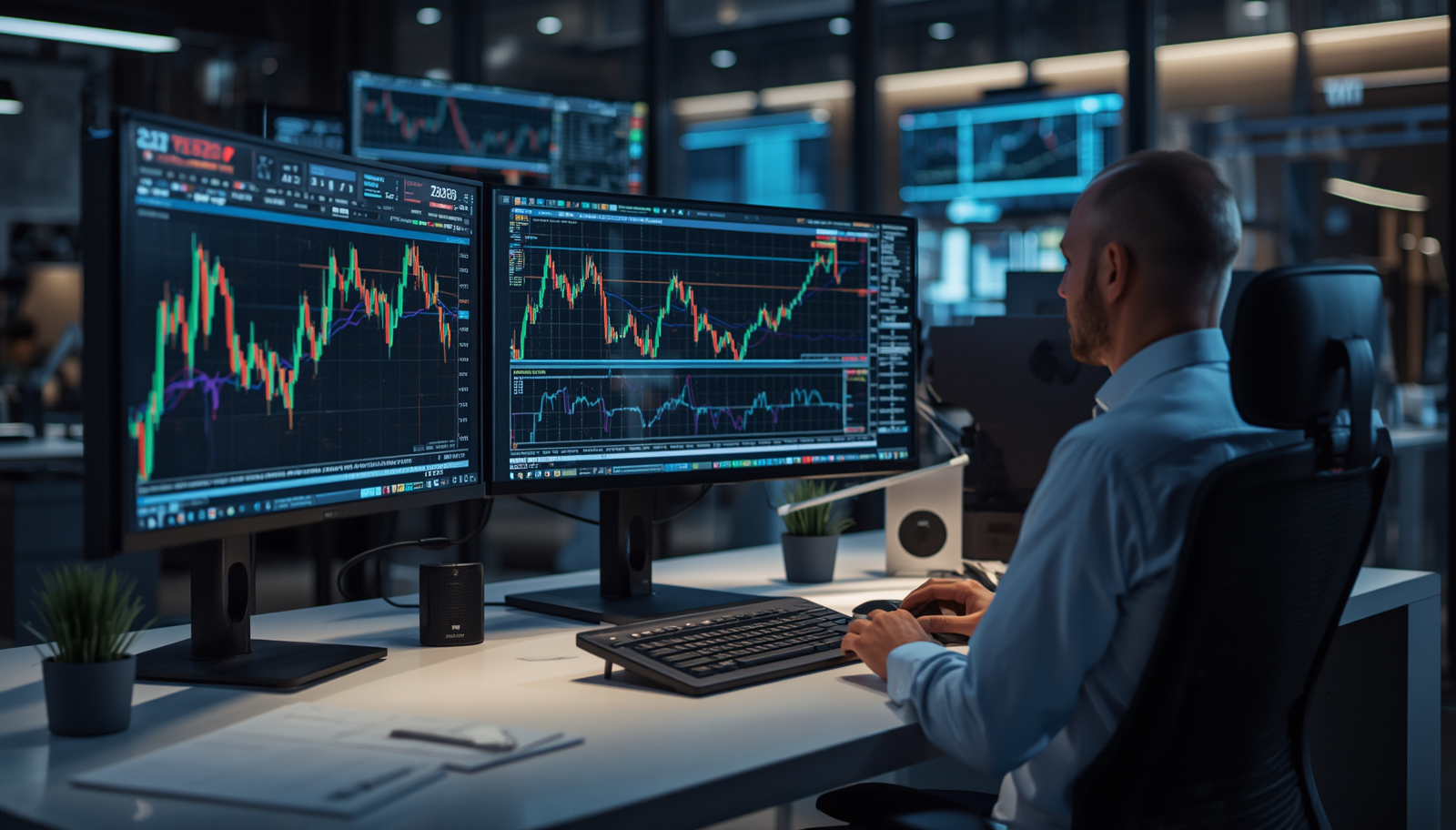
Financial markets are changing faster than ever. Technology, artificial intelligence, algorithmic trading, and shifting economic conditions have transformed the way people analyze and trade markets. While these developments have made trading more accessible, they have also made the market more competitive.
In 2026, successful trading isn’t about discovering a secret indicator or blindly following someone else’s signals. Consistent results come from having a clear strategy, managing risk properly, and staying disciplined when market conditions change.
Many beginners enter the market hoping to make quick profits, only to discover that emotional decisions, excessive risk, and poor planning can quickly turn into losses. Experienced traders take a different approach. They build strategies around technical analysis, market behavior, risk management, and clearly defined rules.
This guide covers several trading strategies that remain useful in 2026 and explains how traders can apply them across stocks, forex, cryptocurrencies, commodities, and indices.
Why Trading Strategies Matter
A trading strategy gives you a framework for making decisions.
Instead of asking yourself whether you should buy or sell every time the market moves, you already know what conditions need to be present before entering a trade.
A good strategy can help you identify better opportunities, control risk, reduce emotional decisions, maintain consistency, and measure your performance over time.
No strategy can predict every market move. The goal isn’t to eliminate uncertainty but to have a structured way of dealing with it.
Trend-Following Strategy
Trend following remains one of the most widely used approaches in 2026.
The basic idea is straightforward: instead of trying to predict when a trend will reverse, traders attempt to participate in an established trend.
An uptrend is generally characterized by higher highs and higher lows, while a downtrend tends to produce lower highs and lower lows.
Traders may also use moving averages and other technical tools to confirm the direction of the market.
The biggest challenge is patience. Strong trends don’t appear every day, and trying to force trades when the market is moving sideways can lead to unnecessary losses.
Trend followers aren’t trying to buy the exact bottom or sell the exact top. They are simply trying to capture a meaningful part of an existing move.
Swing Trading
Swing trading is popular among traders who want to participate in the markets without spending the entire day watching charts.
Positions are typically held for several days or weeks, depending on the setup and market conditions.
Swing traders often look for opportunities around support and resistance, trend continuation patterns, breakouts, and temporary pullbacks.
Because swing trading doesn’t require constant monitoring, it can be a practical option for people who have jobs, businesses, or other responsibilities.
The key is to wait for strong setups instead of entering trades simply because the market happens to be moving.
Breakout Trading
Breakout trading focuses on price movements that occur when an asset moves beyond an important support or resistance level.
A move above resistance may signal increasing buying pressure, while a break below support can indicate growing selling pressure.
However, not every breakout is genuine.
Markets frequently produce false breakouts where price briefly moves beyond a key level before reversing. For this reason, experienced traders often look for confirmation through factors such as trading volume, candle closes, or continued momentum.
Breakouts can be especially powerful after long periods of consolidation, when buyers and sellers have been competing within a relatively narrow range.
Pullback Trading
Chasing a market after a large price move can be risky.
Pullback trading takes a different approach. Instead of entering after a strong rally or decline, traders wait for a temporary correction and look for an opportunity to join the existing trend at a potentially better price.
Markets rarely move in a perfectly straight line. Even strong trends often experience short-term retracements.
For example, during a strong uptrend, price may temporarily fall toward a previous support area before buyers return.
When the original trend resumes, traders who entered during the pullback may have a more favorable risk-to-reward setup than those who chased the initial move.
Moving Average Strategy
Moving averages remain a popular part of many trading systems.
They can help traders identify the general direction of a market, locate potential dynamic support and resistance areas, and monitor changes in momentum.
Some traders compare short-term and long-term moving averages to identify potential trend changes or crossover signals.
However, moving averages are based on previous price data, so they shouldn’t be treated as standalone prediction tools.
They generally become more useful when combined with price action, market structure, volume, and other forms of analysis.
Price Action Trading
Price action trading focuses primarily on what the market itself is doing rather than relying on a large collection of technical indicators.
Traders study candlestick patterns, market structure, support and resistance, trend behavior, and changes in buying and selling pressure.
One advantage of price action is that the same basic principles can be applied to many markets.
Whether you’re looking at stocks, forex, commodities, or cryptocurrencies, price ultimately reflects the combined decisions of buyers and sellers.
Learning to interpret those movements can help traders develop a deeper understanding of market behavior.
Scalping
Scalping is one of the fastest trading styles.
Scalpers attempt to profit from very small price movements, often opening and closing positions within minutes or even seconds.
Modern trading platforms, faster execution, and advanced analytical tools have made this style more accessible.
However, accessibility doesn’t mean simplicity.
Scalping requires intense concentration, quick decision-making, strict risk management, and careful attention to transaction costs.
A strategy that appears profitable before fees and spreads may perform very differently once real trading costs are included.
For this reason, scalping is generally more suitable for experienced traders who understand the risks and can maintain discipline under pressure.
Position Trading
Position trading takes a much longer view.
Positions may remain open for weeks, months, or even longer as traders attempt to benefit from major market trends.
This style often combines technical analysis with fundamental and macroeconomic factors such as interest rates, inflation, monetary policy, corporate earnings, economic growth, and geopolitical developments.
Because positions are held for longer periods, traders don’t need to react to every small price movement.
Position trading can therefore be a good fit for people who prefer a slower approach and don’t want to spend hours monitoring short-term charts.
Multi-Timeframe Analysis
Looking at only one timeframe can give traders an incomplete picture of the market.
Multi-timeframe analysis solves this problem by examining several timeframes before entering a trade.
A trader might use a daily chart to identify the broader trend and then move to a four-hour or one-hour chart to find a potential entry.
For example, if the daily chart shows a strong uptrend, a trader may wait for a short-term pullback on a lower timeframe before considering a long position.
This approach can help traders align short-term entries with larger market trends.
AI-Assisted Trading
Artificial intelligence is becoming increasingly common in trading.
In 2026, traders can use AI-based tools for market scanning, sentiment analysis, statistical research, trade journaling, pattern recognition, and strategy testing.
These tools can save time and help traders process large amounts of information.
However, AI isn’t a guaranteed path to profitable trading.
Markets can behave unexpectedly, especially during major economic announcements, geopolitical events, or periods of extreme volatility.
AI should therefore be treated as a support tool rather than a replacement for human judgment, risk management, and proper research.
Risk Management Is More Important Than the Strategy
A great strategy can still fail if risk management is poor.
This is one of the most important lessons traders need to understand.
Professional traders generally focus on limiting the amount they can lose on individual trades rather than trying to maximize every possible gain.
Risk management can include appropriate position sizing, stop-loss orders, reasonable risk-to-reward ratios, avoiding excessive leverage, and maintaining diversified exposure where appropriate.
You don’t need to win every trade to be profitable.
For example, a trader could have several losing trades and still finish profitably if the winners are substantially larger than the losses.
Protecting your trading capital gives your strategy enough time to work.
Emotional Discipline
Trading psychology can have just as much influence on results as technical analysis.
Fear can cause traders to close good positions too early.
Greed can encourage excessive leverage or oversized positions.
After a losing streak, frustration can lead to revenge trading, where traders take unnecessary risks in an attempt to recover their money quickly.
The best defense is a clearly written trading plan.
Knowing exactly when to enter, where to exit, how much to risk, and when to stay out of the market can reduce emotional decision-making.
A trading journal can also help identify psychological patterns that repeatedly affect your results.
Common Mistakes to Avoid
Many trading losses don’t come from a lack of sophisticated tools. They come from basic mistakes.
Common problems include trading without a plan, risking too much on one position, ignoring stop-loss levels, overtrading, chasing large price movements, using excessive leverage, and relying entirely on technical indicators.
Another common mistake is constantly changing strategies after a few losing trades.
Every strategy experiences periods when it performs poorly. Instead of abandoning a system immediately, traders should evaluate whether the problem is the strategy itself, poor execution, or unsuitable market conditions.
Avoiding unnecessary mistakes can be just as valuable as learning new techniques.
Choosing the Right Strategy
There is no universal trading strategy that works perfectly for everyone.
Your choice should depend on your available time, experience, personality, financial goals, and tolerance for risk.
Day traders may prefer scalping, momentum trading, or short-term breakout strategies.
Swing traders may find trend following, pullbacks, and breakout setups more suitable.
Long-term traders may prefer position trading combined with fundamental and macroeconomic analysis.
The most important step is to test a strategy before committing significant capital.
Use historical data, paper trading, or a demo account to understand how the strategy performs under different market conditions.