
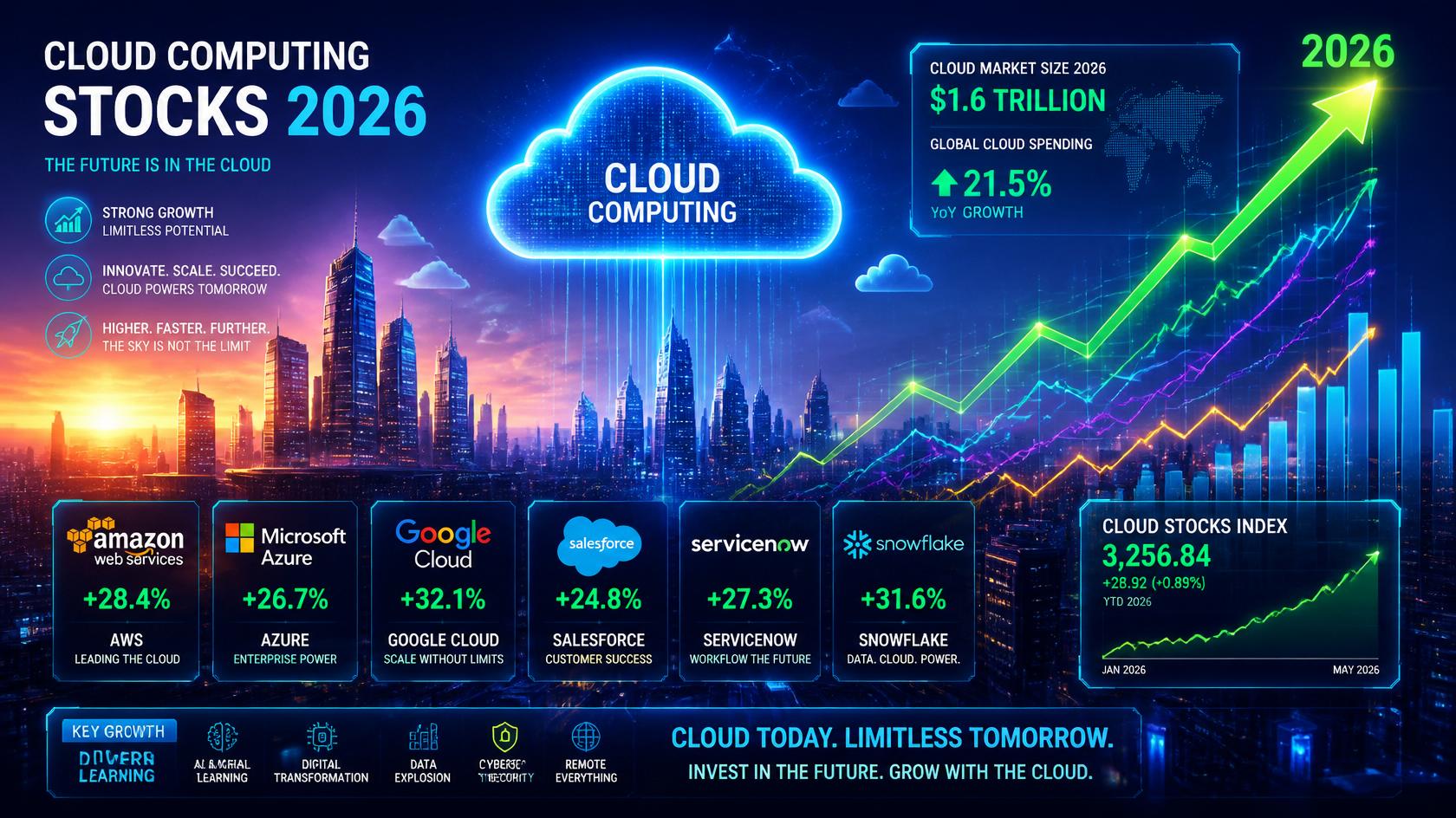
Cloud computing has become a core part of the modern digital economy. From artificial intelligence applications and streaming platforms to financial services and healthcare systems, countless businesses now depend on cloud technology every day.
As companies continue moving their data, software, and IT infrastructure to the cloud, demand for cloud services is expected to remain strong throughout 2026.
For investors, cloud computing remains one of the more important long-term themes in the technology sector. The industry is benefiting from several major trends at once, including digital transformation, remote and hybrid work, artificial intelligence, cybersecurity, and growing enterprise technology spending.
This article looks at why cloud computing continues to grow, the trends shaping the industry, and several cloud computing stocks worth keeping an eye on in 2026.
Why Cloud Computing Remains a Growth Industry
Cloud computing allows businesses to access computing power, storage, software, and other technology resources over the internet rather than maintaining everything on their own premises.
For many organizations, this can make it easier to scale operations, control technology costs, and introduce new services more quickly.
Several trends continue to support cloud adoption.
Artificial intelligence requires huge amounts of computing power and storage. Remote and hybrid work rely heavily on cloud-based collaboration tools. Cybersecurity services are increasingly being delivered through cloud platforms.
Businesses also need flexible infrastructure that can adapt as customer demand changes, while data analytics and machine learning require substantial cloud processing capabilities.
Government agencies and healthcare organizations are also continuing to modernize their digital systems.
Because these trends are not limited to a single industry, cloud computing has become an important part of the wider technology ecosystem.
The Cloud Computing Market in 2026
Cloud computing has evolved far beyond simply storing files online.
Today’s cloud platforms offer artificial intelligence tools, cybersecurity services, application-development environments, data analytics, networking solutions, and enterprise software.
The largest cloud providers continue investing heavily in data centers, AI infrastructure, and new cloud services. At the same time, specialized companies are expanding in areas such as cybersecurity, customer relationship management, data analytics, and enterprise automation.
As businesses continue their digital transformation and begin incorporating more AI-powered applications into everyday operations, demand for cloud infrastructure and services could remain strong.
What Makes a Strong Cloud Computing Stock?
Not every company in the cloud industry has the same business model or growth prospects. Investors often look at several characteristics when evaluating cloud companies.
Recurring Revenue
Subscription-based cloud services can provide businesses with recurring revenue and more predictable cash flow.
Strong Customer Retention
Cloud platforms can become deeply connected to a company’s daily operations. Once a business builds its systems around a particular platform, switching providers can be complicated and expensive.
AI Integration
Cloud companies that successfully incorporate artificial intelligence into their platforms may be able to benefit from growing demand for AI-powered applications and automation.
Scalable Infrastructure
Large cloud providers can serve more customers without having to completely rebuild their businesses each time demand increases.
Global Reach
A strong international customer base can give cloud companies additional opportunities for growth beyond their domestic markets.
Top Cloud Computing Stocks Worth Watching in 2026
Microsoft (NASDAQ: MSFT)
Cloud Leader
Microsoft remains one of the biggest names in cloud computing through its Azure platform.
The company benefits from demand for cloud infrastructure, artificial intelligence services, cybersecurity solutions, and productivity software.
One of Microsoft’s major strengths is the way Azure connects with its wider business ecosystem. Companies already using Microsoft products can find it convenient to adopt additional cloud and AI services from the same provider.
As businesses continue moving more workflows to the cloud and experimenting with AI tools, Microsoft remains a major company for investors following the cloud sector.
Amazon (NASDAQ: AMZN)
AWS
Amazon Web Services, commonly known as AWS, remains a major player in the global cloud infrastructure market.
AWS provides computing, storage, networking, databases, artificial intelligence services, and other cloud solutions to businesses and organizations around the world.
The continued migration of business workloads to the cloud, combined with rising demand for AI computing, supports the long-term importance of AWS within Amazon’s overall business.
Because cloud services are an important part of Amazon’s operations, the company remains one of the most closely watched cloud investments.
Alphabet (NASDAQ: GOOGL)
AI + Cloud
Google Cloud has developed into an important competitor in the cloud market.
Alphabet is investing heavily in artificial intelligence infrastructure, data analytics, and enterprise cloud services. Its long experience with AI and machine learning gives Google Cloud an advantage when businesses are looking for cloud-based AI capabilities.
As more companies experiment with AI-powered applications and data-intensive services, Alphabet remains a cloud stock worth watching.
Oracle (NYSE: ORCL)
Enterprise Cloud
Oracle has expanded significantly beyond its traditional database business and has become an important provider of cloud infrastructure and enterprise technology.
The company focuses on enterprise cloud infrastructure, databases, and AI-related cloud services.
Its established relationships with corporate customers provide a strong foundation as those organizations move more workloads into cloud environments.
Growing demand from enterprise customers and government organizations has also strengthened Oracle’s position in the cloud market.
Salesforce (NYSE: CRM)
SaaS Leader
Salesforce is one of the best-known names in cloud-based customer relationship management software.
Its platform helps businesses manage sales, marketing, customer service, analytics, and other important operations through cloud-based applications.
The company is also expanding its use of artificial intelligence and automation across its platform.
As businesses look for ways to improve productivity and automate routine processes, Salesforce remains an important company within the software-as-a-service segment of the cloud industry.
Snowflake (NYSE: SNOW)
Data Cloud
Snowflake focuses on cloud-based data storage, data warehousing, and analytics.
As organizations collect and process increasingly large amounts of information, they need flexible systems capable of managing that data efficiently.
Snowflake’s ability to operate across multiple cloud environments can appeal to businesses that want flexibility rather than being tied to a single cloud provider.
This focus on data management gives Snowflake exposure to another important part of the broader cloud computing market.
Cloudflare (NYSE: NET)
Edge + Security
Cloudflare combines cloud networking, cybersecurity, and edge-computing services.
Its technology helps businesses improve website and application performance while protecting their digital services from various online threats.
The company’s distributed network also allows applications and content to be delivered closer to users.
As businesses increasingly require secure and fast digital services, demand for cloud connectivity, cybersecurity, and edge computing could continue supporting Cloudflare’s growth.
How Artificial Intelligence Is Accelerating Cloud Growth
Artificial intelligence has become one of the strongest drivers of cloud computing demand.
Training and running advanced AI models can require enormous amounts of computing power. Most businesses do not have the resources or infrastructure to build everything themselves, which makes cloud platforms an attractive option.
Cloud providers can give businesses access to the computing resources, storage, networking, and software tools needed to develop and operate AI applications.
Companies offering AI development platforms, machine-learning tools, cloud infrastructure, and specialized computing resources could therefore benefit as AI adoption expands.
The relationship between AI and cloud computing is one of the most important technology investment themes of 2026.
Cybersecurity and Cloud Services
The shift toward cloud computing also increases the importance of cybersecurity.
As companies move more sensitive information and critical applications into cloud environments, they need stronger tools to protect those systems.
Many cloud providers now offer security features such as identity management, encryption, threat detection, compliance monitoring, and access controls.
This creates an additional opportunity for cloud companies. Security is no longer simply an optional feature; for many enterprise customers, it is an essential part of choosing a cloud platform.
Cloud Computing Risks Investors Should Consider
Despite its growth potential, cloud computing is not a risk-free investment.
Competition
The market is highly competitive. Major technology companies continue spending heavily on infrastructure, AI, software, and new cloud services.
Valuation Risk
Some cloud companies can trade at high valuations when investors expect rapid future growth. If growth slows or market conditions change, these stocks can experience significant volatility.
Capital Expenditures
Building data centers and AI infrastructure requires substantial investment. Large spending programs can put pressure on short-term cash flow and profitability.
Regulatory Concerns
Cloud providers operate across multiple countries, each with its own rules regarding data privacy, cybersecurity, and digital services. Changes in regulation could affect how companies operate in different markets.
For these reasons, investors should look beyond industry growth and examine individual companies’ financial strength, profitability, cash flow, competitive position, and long-term strategy.
Long-Term Outlook for Cloud Computing
The long-term outlook for cloud computing remains closely connected to the continuing digital transformation of the global economy.
Healthcare organizations, financial institutions, manufacturers, retailers, schools, and government agencies are all increasing their use of cloud technology.
Artificial intelligence is adding another major source of demand by requiring more computing power, storage, networking, and specialized infrastructure.
Cloud computing has also become deeply integrated into everyday business operations. For many organizations, moving away from cloud services would be difficult and disruptive.
That makes cloud infrastructure and software an important part of the technology landscape well beyond 2026.
Building a Cloud Computing Investment Strategy
Investors interested in cloud computing may want to consider exposure across several different parts of the industry rather than relying on a single company.
Large cloud infrastructure providers can offer exposure to the core computing market, while specialized software, data, networking, and cybersecurity companies can provide exposure to other areas of cloud growth.
When evaluating potential investments, investors may want to consider factors such as revenue growth, free cash flow, customer retention, profit margins, AI capabilities, valuation, and competitive positioning.
Cloud computing is a long-term technology trend, but individual stocks can still experience significant short-term price movements.
For that reason, a disciplined investment approach focused on business fundamentals and long-term growth may be more useful than trying to predict every short-term market move.