
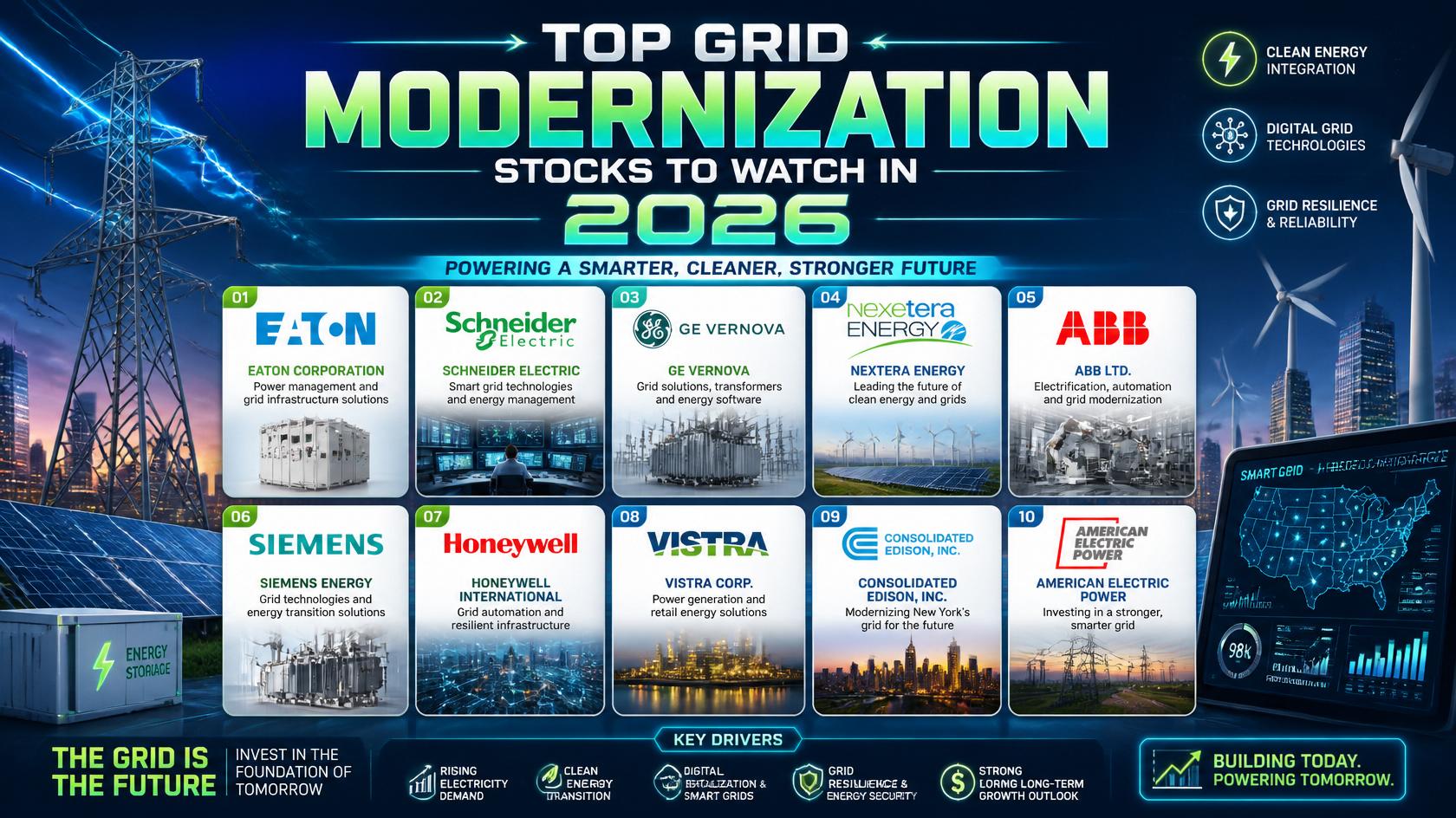
The electric grid is going through one of the biggest changes in its history. Much of the infrastructure we depend on today was built decades ago, while electricity demand continues to rise. Artificial intelligence, electric vehicles, renewable energy, data centers, and increasingly severe weather conditions are putting new pressure on power networks around the world.
As a result, utilities and governments are investing heavily in modernizing the grid. In 2026, grid modernization has become an important investment theme across both the energy and industrial sectors.
For investors, this trend creates opportunities beyond traditional utility companies. Businesses that manufacture electrical equipment, upgrade transmission networks, develop smart-grid technologies, and provide energy management solutions could benefit from years of infrastructure spending.
This article looks at why grid modernization is becoming so important, the technologies driving the transformation, several companies worth watching, the risks investors should understand, and the sector’s longer-term outlook.
Why Grid Modernization Is Essential
A large portion of today’s electrical infrastructure was built many years ago. At the same time, the amount of electricity needed by homes, businesses, factories, and technology companies continues to increase.
Several trends are making grid upgrades more urgent.
Artificial intelligence data centers require huge amounts of reliable electricity. Electric vehicles are increasing demand for charging infrastructure. Wind and solar power require transmission networks that can move electricity efficiently over long distances.
Extreme weather events can also put additional stress on aging power infrastructure, while consumers and businesses increasingly expect dependable electricity with fewer outages.
Governments are also pursuing cleaner energy targets, which require electrical grids capable of handling changing sources of power.
Together, these factors are turning grid modernization into a major infrastructure priority, particularly in the United States.
The State of the Grid in 2026
Electricity demand is becoming increasingly connected to the growth of the digital economy.
Cloud computing, artificial intelligence, advanced manufacturing, healthcare facilities, and telecommunications networks all depend on reliable electricity. Even a short interruption can create serious problems for operations that run continuously.
At the same time, utilities are bringing more renewable energy onto the grid while trying to maintain stability and reliability.
Modernization can involve replacing outdated equipment, expanding transmission capacity, installing smart sensors, improving cybersecurity, introducing advanced software, and adding energy-storage capabilities.
All of this spending creates opportunities for companies that supply the equipment and technology utilities need to build a more modern grid.
Key Technologies Driving Grid Modernization
Several technologies are changing the way electricity networks operate in 2026.
Smart-grid systems allow utilities to monitor electricity usage and network conditions in real time. This can help improve efficiency and identify problems more quickly.
Advanced transmission equipment can increase the amount of electricity that high-voltage networks are capable of carrying.
Battery energy-storage systems can help utilities manage fluctuations in electricity supply, particularly as renewable energy becomes a larger part of the power mix.
Digital substations improve automation and monitoring, while artificial intelligence can help utilities predict equipment problems before they become major failures.
Advanced metering systems also give consumers better information about their energy usage while providing utilities with more detailed operational data.
Cybersecurity is another critical part of modernization. As power infrastructure becomes more connected and digital, protecting it from cyber threats becomes increasingly important.
Together, these technologies are changing how electricity is generated, transmitted, distributed, and managed.
Why Investors Are Interested in Grid Modernization Stocks
One reason investors are paying attention to this sector is the long-term nature of infrastructure spending.
Utilities typically plan major projects years in advance rather than making short-term purchases. That can create relatively steady demand for the equipment, engineering services, and technologies needed to upgrade electrical networks.
Government funding is another important factor. Programs supporting transmission expansion, renewable-energy integration, and grid resilience can create additional opportunities for companies serving the industry.
Some companies also benefit from several trends at the same time. Demand for grid equipment can overlap with growth in industrial automation, electrification, data centers, and renewable energy infrastructure.
This broader exposure can make the grid modernization theme especially interesting for long-term investors.
Top Grid Modernization Stocks to Watch in 2026
Eaton Corporation
Eaton has become an important company in the global electrification market.
Its products include power-management systems, circuit-protection equipment, electrical distribution technology, and intelligent energy-management solutions.
Demand from commercial buildings, data centers, utilities, and industrial facilities continues to create opportunities for its electrical products.
Because Eaton operates across several areas of the electrical market, its diversified business gives investors exposure to multiple parts of the broader electrification trend.
Schneider Electric
Schneider Electric is a major global provider of energy-management and industrial-automation technologies.
Its digital energy solutions help businesses and utilities manage electricity more efficiently and improve the performance of their systems.
The company provides software, electrical equipment, automation technologies, and other solutions used in modern energy infrastructure.
As organizations look for better ways to manage electricity and reduce energy waste, Schneider Electric remains a company worth following.
Siemens Energy
Siemens Energy operates across several areas of the power industry, including generation, transmission, and grid technology.
The company provides equipment such as transformers, substations, high-voltage transmission systems, and digital grid solutions.
As countries invest in renewable energy while upgrading older transmission networks, demand for these technologies can create opportunities for Siemens Energy.
Its presence across multiple parts of the energy sector also gives the company broad exposure to the modernization of power infrastructure.
Quanta Services
Quanta Services focuses on the engineering, construction, and maintenance of electrical transmission and distribution infrastructure.
The company works with utilities, renewable-energy developers, and telecommunications providers.
As more money flows into transmission expansion and electrical infrastructure, demand for engineering and construction services can increase.
Its project pipeline also reflects the growing need to upgrade and expand power networks.
Hubbell Incorporated
Hubbell manufactures electrical components used throughout power transmission and distribution systems.
Its products include connectors, transformers, switches, lighting systems, and other utility infrastructure equipment.
The company serves a broad range of customers, including electric utilities, telecommunications providers, and industrial businesses.
As utilities replace aging equipment and expand their networks, demand for the components required to build and maintain those systems can continue supporting Hubbell.
GE Vernova
GE Vernova has become an important participant in the global energy transition.
The company provides grid equipment, renewable-energy technologies, power-generation systems, and digital grid software.
Its products and services can help utilities upgrade older infrastructure while integrating increasing amounts of renewable electricity into existing networks.
Continued investment in cleaner energy systems could therefore provide additional opportunities for GE Vernova.
ABB Ltd.
ABB develops electrical equipment, automation systems, robotics, and digital energy technologies.
Its products can help improve energy efficiency while supporting industrial electrification and modern utility systems.
With businesses spanning automation and intelligent electrical technologies, ABB is positioned across several areas that are becoming increasingly important as power infrastructure becomes more digital.
The Connection Between Artificial Intelligence and Grid Modernization
Artificial intelligence is not only changing the technology industry; it is also increasing the amount of electricity the world needs.
Large AI data centers operate around the clock and require substantial amounts of reliable power.
Meeting this demand may require utilities to expand transmission capacity, strengthen distribution networks, improve efficiency, and adopt better monitoring systems.
This creates an important connection between AI growth and grid modernization. Companies supplying electrical equipment and infrastructure can benefit indirectly as technology companies build out the physical infrastructure needed to support AI.
This relationship could remain an important investment theme throughout the decade.
Renewable Energy Is Accelerating Grid Investment
The growth of renewable energy is closely tied to the need for better transmission infrastructure.
Large solar and wind projects are often built in locations that are far from major population centers. Electricity therefore needs to travel long distances before reaching consumers.
That requires additional transmission lines, substations, transformers, and other grid equipment.
Energy storage is also becoming increasingly important because battery systems can help balance electricity supply and demand as renewable generation changes throughout the day.
Companies providing transmission equipment, substations, transformers, and grid-management software could therefore benefit from continued investment in renewable-energy infrastructure.
Risks Investors Should Consider
Although the long-term case for grid modernization is strong, investors should not overlook the risks.
Large infrastructure projects can face construction delays, regulatory hurdles, permitting issues, and unexpected cost increases.
Higher interest rates can also increase financing costs for utilities and infrastructure companies, potentially affecting spending plans.
Manufacturers may face higher costs when prices for raw materials increase. Political changes can also influence government infrastructure budgets and energy priorities.
Competition is another consideration. Many large industrial companies are competing for major utility and infrastructure contracts.
Before investing in an individual company, investors should consider factors such as financial performance, profitability, project backlogs, debt, competitive position, and expected long-term demand.
Building a Diversified Grid Modernization Portfolio
Investors interested in grid modernization do not necessarily need to focus on one part of the industry.
Electrical equipment manufacturers offer exposure to the hardware side of grid upgrades. Engineering and construction companies can benefit from the physical expansion and replacement of infrastructure.
Automation companies provide exposure to the digital transformation of electricity networks, while software providers can benefit from growing demand for grid analytics, monitoring, and predictive maintenance.
Holding exposure across several segments may help reduce the risks associated with relying on a single company while still allowing investors to participate in the broader modernization trend.
Long-Term Outlook for Grid Modernization
The long-term outlook for grid modernization remains closely tied to rising electricity demand.
Artificial intelligence, electric vehicles, renewable energy, industrial automation, cloud computing, and other technologies are all increasing the importance of reliable power infrastructure.
Governments are likely to continue investing in transmission expansion, grid resilience, and the integration of cleaner energy sources. Utilities also have strong reasons to replace aging equipment and improve reliability.
The result is a structural demand story that could continue well beyond 2026.
For investors, grid modernization offers exposure to several major trends at once: electrification, artificial intelligence, renewable energy, automation, and the growing digital economy.
However, the potential of the industry does not guarantee that every company will deliver strong returns. Careful research, attention to company fundamentals, and diversification remain important when evaluating individual grid modernization stocks.