
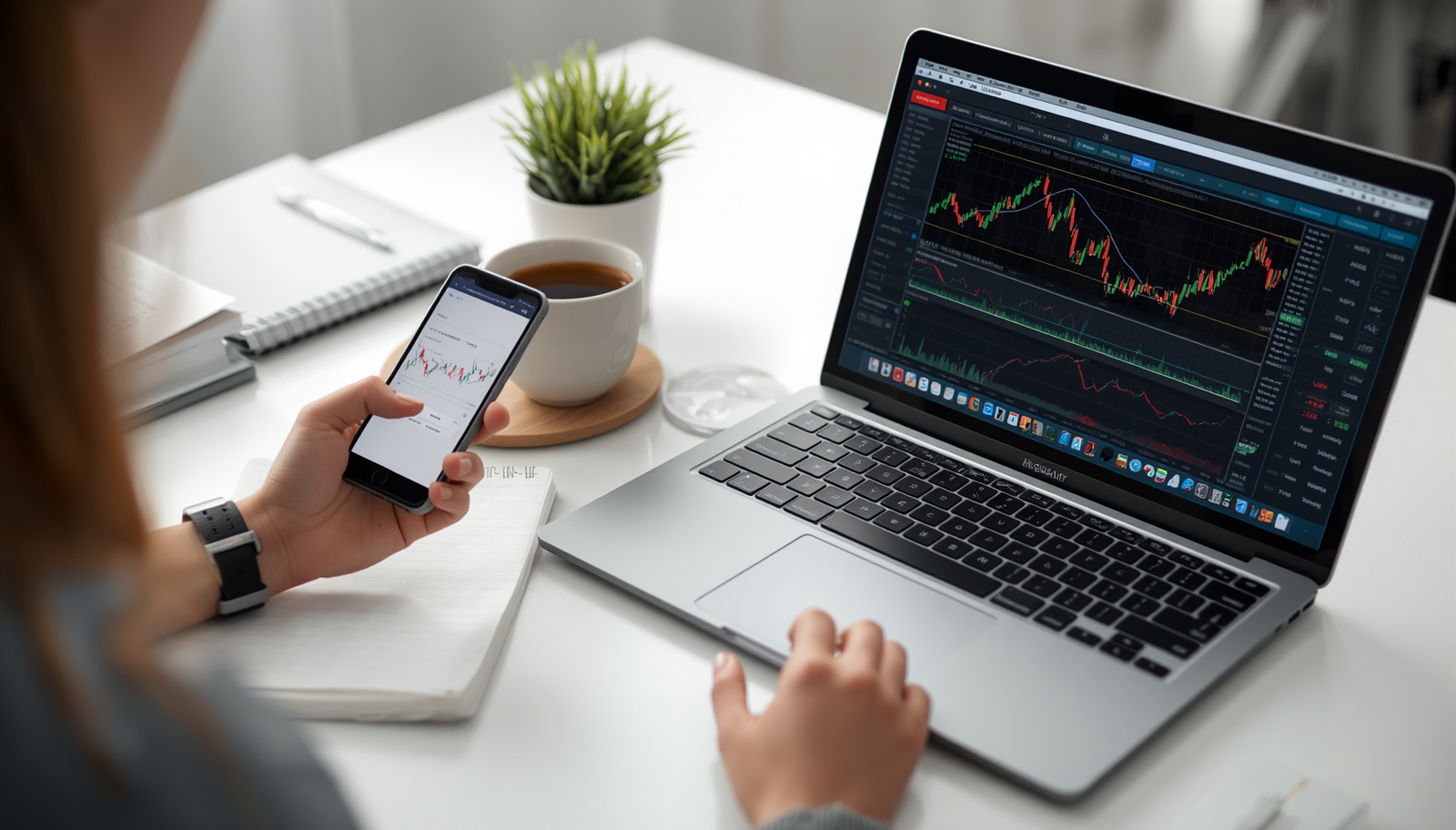
Online trading has opened the door to financial markets that were once largely accessible only to professional investors and major institutions. Today, anyone with an internet connection can explore markets such as stocks, cryptocurrencies, forex, commodities, ETFs, and indices through online trading platforms.
But easy access does not mean easy profits.
Trading can provide opportunities, but it also comes with real financial risk. Beginners often struggle because they start without understanding how markets work, risk too much money, or make decisions based on fear, greed, and market hype.
Building long-term trading skills takes time. Education, patience, discipline, and sensible risk management are far more important than trying to make quick money.
This beginner-friendly guide explains how online trading works in 2026, the major financial markets, common trading approaches, essential risk-management techniques, and the steps you can take to build a more disciplined trading routine.
What Is Online Trading?
Online trading is the process of buying and selling financial assets through an internet-based trading platform.
Instead of calling a broker whenever you want to place an order, modern platforms allow you to manage trades directly from a computer, smartphone, or tablet.
Most platforms provide live or near-real-time market information, interactive charts, order-management tools, portfolio tracking, and other features designed to make trading more accessible.
The internet has also made it possible for individual investors to participate in markets around the world without needing to be physically present at a financial exchange.
How Online Trading Works
At its simplest, trading is based on buyers and sellers interacting in a market.
When you buy an asset, you generally expect its price to increase so that you can potentially sell it at a higher price. When you sell, you may be taking profits, reducing a position, or expecting the asset to decline, depending on the type of trade.
Prices change because supply and demand are constantly shifting.
When buying interest becomes stronger than selling pressure, prices may rise. When sellers become more aggressive, prices may fall.
Your trading platform sends your order to the appropriate market or liquidity provider, where it can be matched or executed according to the type of order you selected.
Popular Financial Markets
Online traders can choose from several major markets, each with its own characteristics.
Stocks represent ownership in publicly traded companies. Investors can potentially benefit from rising share prices and, in some cases, dividends.
Cryptocurrencies are digital assets that trade through cryptocurrency markets. Bitcoin and Ethereum are among the best-known examples, although thousands of other digital assets exist.
Forex involves trading currencies against one another. Popular pairs include EUR/USD, GBP/USD, and USD/JPY.
Commodities include assets such as gold, silver, crude oil, natural gas, and agricultural products.
Exchange-traded funds (ETFs) contain collections of assets and allow investors to gain exposure to a group of securities through a single fund.
Market indices track groups of securities and are often used to measure the performance of a particular market or segment.
Each market behaves differently, so beginners should understand how their chosen market works before risking real money.
Types of Online Traders
There is no single way to approach the financial markets.
Day traders open and close positions during the same trading session. Their focus is mainly on short-term price movements.
Swing traders generally hold positions for several days or weeks while attempting to benefit from medium-term market moves.
Position traders take a longer-term view and may hold trades for several months based on broader trends and fundamental conditions.
Long-term investors typically focus on building wealth over years rather than trying to profit from short-term price fluctuations.
Your choice should depend on your goals, available time, experience, and tolerance for market risk.
Choosing the Right Trading Platform
The platform you choose can have a significant impact on your trading experience.
Look for a platform with strong security, transparent fees, reliable execution, an easy-to-use interface, and access to the markets you actually want to trade.
Useful features can include advanced charting, market news, educational materials, portfolio tracking, price alerts, and mobile access.
Beginners do not necessarily need the most complicated platform available. A simple and reliable interface can make it easier to learn the basics without becoming overwhelmed.
Always review the platform’s fees, terms, regulatory status where applicable, and security features before depositing money.
Understanding Market Orders
Knowing how different order types work is an important part of trading.
A market order attempts to execute immediately at the best available price.
A limit order allows you to specify the price at which you are willing to buy or sell. The order will generally execute only if the market reaches the specified price and sufficient liquidity is available.
A stop-loss order can help limit a potential loss by triggering an exit when the market reaches a predetermined level.
A take-profit order can be used to automatically close a position when a chosen profit target is reached.
Order behavior can vary between brokers and markets, so traders should understand the specific rules of their platform before using them with real money.
Learning Technical Analysis
Technical analysis involves studying price charts and market data to identify possible trading opportunities.
Traders commonly examine trends, support and resistance, moving averages, candlestick patterns, trend lines, and momentum indicators.
For example, a trader might notice that an asset has repeatedly found support around a particular price level. That information could become part of a broader trading setup.
Technical analysis can help organize trading decisions, but it cannot predict future prices with certainty.
The market can always behave differently from what a chart pattern suggests.
Understanding Fundamental Analysis
Fundamental analysis takes a different approach by examining the factors that can influence an asset’s underlying value.
For stocks, traders may study revenue, earnings, debt, cash flow, company growth, and industry conditions.
For cryptocurrencies, analysis may include network activity, adoption, technology, development, regulatory changes, and other factors.
Currency traders often pay close attention to interest rates, inflation, employment data, economic growth, and central bank decisions.
Combining fundamental information with technical analysis can give traders a broader perspective, particularly when making medium- or long-term decisions.
Risk Management Is Essential
Risk management is one of the most important skills a trader can develop.
Even the best strategy will experience losing trades. The goal is to ensure that individual losses remain manageable.
Many traders choose to risk only a small portion of their available capital on any single position. Position sizing should reflect both the account size and the distance to the stop-loss.
Stop-loss orders can help control downside risk, while diversification can reduce dependence on one particular asset or market.
The priority should always be protecting trading capital. A trader who preserves capital has a better opportunity to continue learning and participating in the market.
Developing a Trading Plan
Trading without a plan often leads to inconsistent decisions.
A written trading plan can establish clear rules for how you approach the market.
It may include your preferred markets, trading style, entry conditions, exit rules, risk limits, position-sizing method, and criteria for evaluating trades.
Having these rules in advance can make it easier to stay disciplined when markets become volatile.
Your plan should not remain fixed forever. As you collect more trading data and gain experience, you can review your results and make carefully considered improvements.
The Importance of Trading Psychology
Trading is not only about charts and numbers. Your emotions can have a major influence on your decisions.
Fear may cause you to exit a good trade too early or avoid a valid opportunity.
Greed can encourage you to take excessive risks after a series of successful trades.
Frustration can lead to revenge trading, where a trader attempts to recover a previous loss by entering poorly planned positions.
Learning to recognize these emotional reactions is an important part of becoming a disciplined trader.
Building Good Trading Habits
Strong trading habits develop gradually.
Set aside time to study the markets and review your previous trades. Keep a trading journal where you record why you entered a position, where you placed your stop, what your target was, and how the trade eventually performed.
Reviewing your decisions can reveal recurring mistakes that may not be obvious while you are actively trading.
Continuous education is also important because markets, technology, regulations, and trading conditions continue to change.
Avoiding Common Beginner Mistakes
Many beginners enter the market expecting fast profits.
That mindset can lead to excessive trading, oversized positions, and poor decisions.
Other common mistakes include trading without a plan, ignoring risk management, chasing rapidly rising assets, using excessive leverage, and trying to recover losses immediately.
Following social-media hype can also be dangerous. An asset becoming popular online does not automatically make it a good investment.
Taking time to research an opportunity and waiting for a suitable setup can prevent many unnecessary mistakes.
Using Technology to Improve Trading
Technology has transformed the way people analyze financial markets.
Artificial intelligence and machine learning can process large amounts of market information and assist with tasks such as pattern recognition, sentiment analysis, and data processing.
Automated trading systems can execute predefined rules without requiring a trader to manually place every order.
Advanced charting platforms can provide technical indicators, alerts, historical data, and customizable analysis tools.
These technologies can make trading more efficient, but they should be viewed as tools rather than replacements for sound judgment.
Mobile Trading in 2026
Mobile trading has become a standard feature of modern investing.
Through smartphone and tablet applications, traders can monitor prices, review charts, receive alerts, manage positions, and access market information without sitting at a desktop computer.
This convenience is useful, but constant access to the market can also encourage overtrading.
Being able to check your portfolio every few minutes does not mean you need to do so. A structured trading plan should determine when and why you review your positions.
Managing Your Expectations
Perhaps the most important lesson for a beginner is that trading does not guarantee profits.
Even experienced traders have losing positions and periods of poor performance.
Trying to become wealthy quickly can encourage excessive risk and unrealistic expectations.
Instead, focus on learning how markets behave, protecting your capital, and gradually improving your decision-making.
Losses are part of trading, but they should be analyzed rather than allowed to trigger emotional reactions.
The Future of Online Trading
Online trading will likely continue evolving as technology develops.
Artificial intelligence, machine learning, blockchain, automated portfolio management, fractional investing, advanced analytics, and stronger cybersecurity are already influencing the financial industry.
Retail traders now have access to analytical tools and market information that were once difficult for individual investors to obtain.
However, better technology does not eliminate market risk.
The traders who adapt successfully will likely be those who combine modern tools with strong financial knowledge, disciplined strategies, and responsible risk management.
Tips for Long-Term Success
Long-term progress starts with education.
Learn how your chosen market works before committing significant capital. Understand the costs involved, practice your strategy, and develop clear rules for managing risk.
Avoid risking money you cannot afford to lose, and do not allow short-term market movements to dictate every decision.
Keep learning, maintain a trading journal, review your performance, and make changes based on evidence rather than emotion.
Most importantly, give yourself time to develop.
Online trading may provide more opportunities than ever before, but sustainable results are built through knowledge, patience, discipline, and consistent risk control—not through chasing quick profits.