
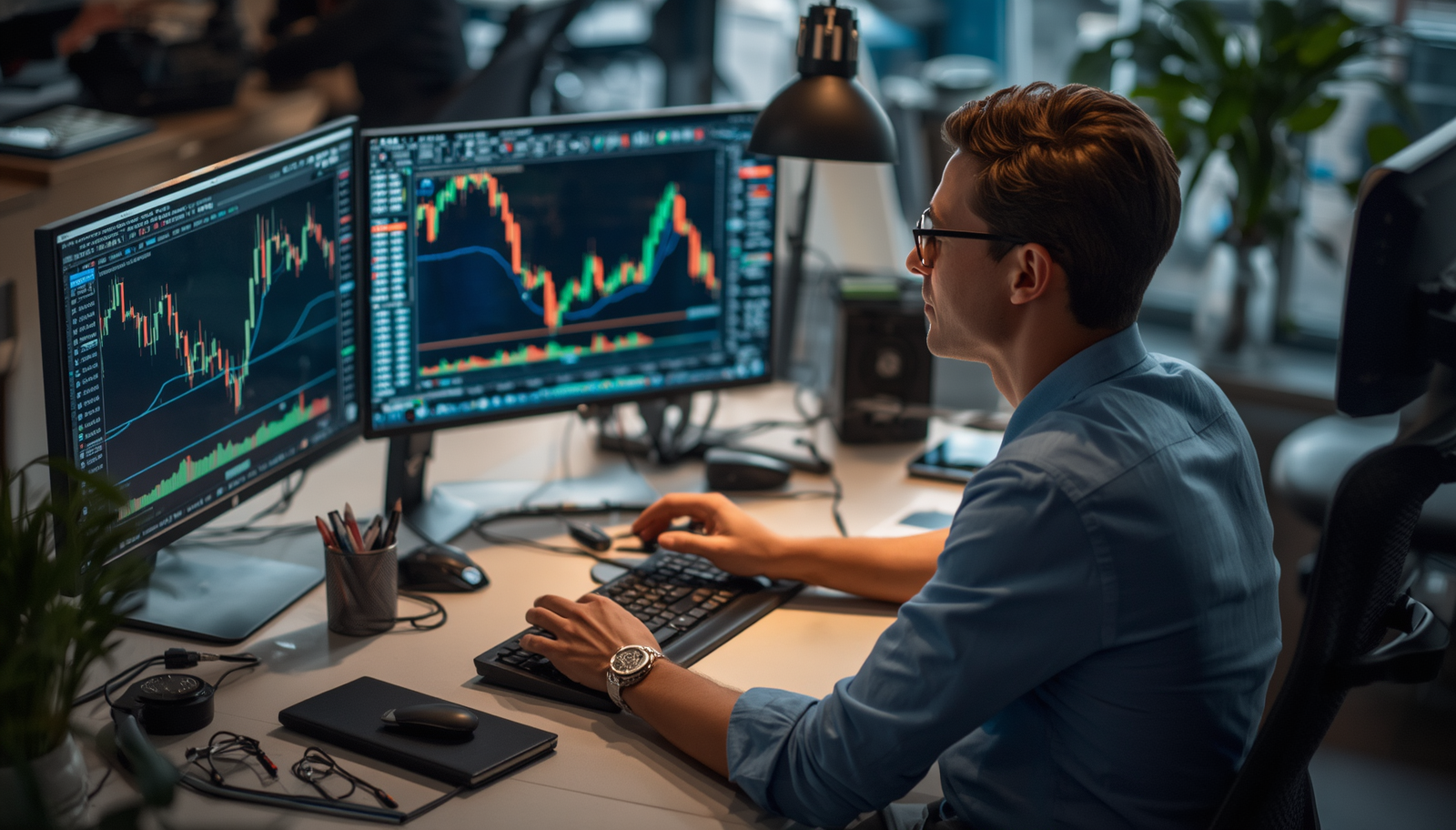
Trading success usually doesn’t come from luck or from discovering a secret indicator that nobody else knows about. Technical analysis, market research, and trading tools certainly matter, but the habits you build as a trader can have an even bigger impact on your long-term results.
In 2026, financial markets are moving faster than ever. Artificial intelligence, algorithmic trading, and instant access to global information can cause prices to react within seconds. Yet despite all this technology, successful traders still depend heavily on discipline, patience, consistency, and emotional control.
Many beginners spend months looking for the perfect strategy while overlooking the everyday behaviors that influence their results. In reality, becoming a better trader often comes down to making good decisions repeatedly and avoiding the mistakes that slowly damage an account.
Here are some of the most useful trading habits that can help improve your performance and build a more sustainable approach to the markets.
Create a Written Trading Plan
A trading plan gives you a clear structure before you put your money at risk.
Trading without one can make it much easier to act on emotions, especially when the market suddenly moves against you.
Your plan should outline the markets you trade, the setups you look for, your entry and exit conditions, position sizing rules, acceptable risk, and the situations where you will stay out of the market.
When volatility increases, having those rules written down can prevent you from making decisions based purely on fear, excitement, or greed.
A good trading plan doesn’t need to predict every possible market movement. It simply needs to give you a consistent framework for making decisions.
Put Risk Management First
Experienced traders understand that protecting capital comes before chasing profits.
No trading strategy wins every time. Even a highly effective system will produce losing trades.
The difference is that disciplined traders keep those losses manageable.
Before opening a position, decide how much of your account you’re willing to risk and make sure your position size reflects that limit. Never increase your risk simply because you feel especially confident about a particular trade.
Good risk management gives your account room to recover from losing periods and allows profitable trades to contribute to long-term growth.
Be Patient and Wait for Quality Setups
One of the most valuable trading habits is knowing when to stay out of the market.
Beginners often believe they should trade every day to make progress. This can lead to entering weak setups simply because they feel the need to do something.
Experienced traders understand that opportunities don’t appear on demand.
They wait for the market to meet the conditions outlined in their strategy. Sometimes that means taking several trades in a week. Other times, it means waiting several days without entering anything.
A few high-quality setups can be far more valuable than a large number of low-probability trades.
Keep a Detailed Trading Journal
A trading journal gives you a record of what you’re actually doing in the market.
For every trade, consider recording the entry and exit price, position size, market conditions, reason for entering, risk level, emotional state, and final result.
Reviewing these records regularly can reveal patterns that aren’t obvious while you’re trading.
You might discover that you consistently enter too early, move stop-losses when trades go against you, or perform better with certain setups than others.
Over time, your journal can become one of your most useful learning tools because it allows you to improve based on real experience rather than assumptions.
Learn to Control Your Emotions
Trading can trigger powerful emotions.
Fear can make you close a good position too early. Greed can encourage you to take excessive risks. Frustration after a loss can lead to revenge trading, where you immediately enter another position in an attempt to recover the money.
These emotional reactions can quickly turn a manageable loss into a much larger problem.
Developing emotional discipline doesn’t mean eliminating emotions completely. It means learning not to let them control your decisions.
Following your trading plan during both winning and losing periods is one of the best ways to develop that discipline.
Keep Learning
Markets don’t stay the same forever.
Economic conditions change, new technologies emerge, regulations evolve, and trading behavior continues to develop. A strategy that worked well in one environment may perform differently in another.
Successful traders continue learning throughout their careers.
Study technical analysis, understand fundamental factors, review historical charts, follow relevant market developments, and regularly analyze your previous trades.
You don’t need to learn everything at once. Consistently improving your knowledge can gradually make your decision-making more effective.
Trade With the Trend
Following the prevailing trend is one of the oldest ideas in technical analysis, and it remains useful.
When an asset is clearly trending higher, looking for opportunities in the direction of that trend can often be easier than trying to predict when it will reverse.
The same principle applies to downtrends.
Traders can use price action, moving averages, trendlines, and market structure to identify the broader direction.
This doesn’t mean every trend will continue forever. It simply means traders should recognize that strong trends can persist longer than expected.
Trying to catch every reversal can be much more difficult than working with the market’s existing direction.
Use Stop-Losses Consistently
A stop-loss can help limit the damage when a trade doesn’t work as expected.
Before entering a position, determine the price level at which your original trade idea would no longer be valid. If appropriate for your strategy, that level can serve as your exit point.
One common mistake is refusing to close a losing trade because you hope the price will eventually recover.
Sometimes it does. Sometimes it continues moving against you.
Accepting a small, planned loss is generally easier to manage than allowing one losing position to become a major threat to your account.
Avoid Overtrading
More activity doesn’t automatically mean more profit.
Overtrading can happen when you’re bored, excited after a winning streak, frustrated after a loss, or simply feel that you need to be in the market.
Every additional trade creates another opportunity to make a mistake and adds potential transaction costs.
Instead of focusing on how many trades you can make, focus on whether each trade genuinely meets your strategy’s criteria.
Knowing when not to trade is a skill in itself.
Manage Position Size Carefully
Position sizing has a major influence on trading performance.
A good strategy can still produce poor results if you consistently take positions that are too large for your account.
Before entering a trade, consider your account size, stop-loss distance, market volatility, and maximum acceptable loss.
Keeping position sizes consistent can make your results more stable and reduce the emotional pressure that comes with large price swings.
You should be able to tolerate a normal losing trade without feeling that your entire account is at risk.
Develop a Daily Trading Routine
Treating trading like a business can improve discipline.
A simple routine might include checking important market news, reviewing major trends, identifying potential setups, monitoring existing positions, and reviewing completed trades at the end of the day.
You don’t necessarily need to spend hours doing this.
The important thing is consistency.
Following a familiar process helps reduce impulsive decisions and ensures that important parts of your trading strategy don’t get overlooked.
Small improvements in your routine can make a meaningful difference over time.
Accept That Losses Are Normal
No trader wins every trade.
Even highly experienced professionals go through losing streaks and periods when their strategies perform below expectations.
The important thing is how you respond.
A losing trade doesn’t automatically mean your strategy is broken or that you are a bad trader. Sometimes a well-planned trade simply doesn’t work.
Instead of taking losses personally, analyze what happened and determine whether the trade followed your rules.
Learning to accept normal losses without becoming emotional makes it easier to stay disciplined over the long term.
Don’t Chase the Market
FOMO, or the fear of missing out, can be extremely expensive.
A trader may watch an asset rise rapidly and decide to enter simply because they don’t want to miss the move. Unfortunately, by that point, much of the potential move may already have happened.
The same problem can occur after a sharp decline when traders rush to sell near the bottom.
Disciplined traders wait for their planned entry conditions instead of chasing price.
If a trade moves without you, let it go. Another opportunity will eventually appear.
Keep Your Expectations Realistic
Unrealistic expectations can lead to unnecessary risk.
Social media often highlights traders who claim to generate extraordinary returns while giving little attention to the losses and risks involved.
Trying to double an account quickly can encourage oversized positions, excessive leverage, and reckless decision-making.
A more realistic approach is to focus on consistent execution and controlled risk.
Long-term growth may appear slower, but sustainable progress is generally more valuable than chasing spectacular short-term returns.
Look After Your Physical and Mental Health
Trading requires concentration and clear judgment.
Poor sleep, excessive stress, lack of exercise, and long periods without breaks can affect your ability to make rational decisions.
A trader who is exhausted or emotionally overwhelmed may be more likely to enter impulsive trades or ignore risk limits.
Getting enough rest, taking regular breaks, exercising, and maintaining a healthy routine can support better decision-making.
Sometimes stepping away from the charts is the most productive thing you can do.
Adapt to Changing Market Conditions
Markets don’t behave the same way all the time.
A strategy that performs well during a strong trend may struggle when prices move sideways. Similarly, a strategy designed for calm markets may behave very differently during periods of extreme volatility.
Successful traders learn to recognize these changes.
Adaptability doesn’t mean constantly changing your strategy every time a trade loses. Instead, it means understanding the market environment and knowing when your existing approach is most effective.
Regularly reviewing performance can help you determine whether adjustments are necessary.
Focus on Consistency, Not Perfection
You don’t need a perfect trading strategy to become a better trader.
What matters more is consistently following good habits.
Manage risk carefully. Wait for quality setups. Keep learning. Record your trades. Control your emotions. Avoid unnecessary trades and remain patient when the market doesn’t offer a clear opportunity.
Trading success is usually built through hundreds or thousands of small decisions rather than one spectacular trade.
The goal isn’t to predict every market movement correctly. It’s to develop a repeatable process that helps you make sensible decisions over the long term.
Final Thoughts
Profitable trading isn’t just about finding the right indicator or strategy. Your daily habits can have an equally important impact on your results.
A written trading plan, disciplined risk management, patience, proper position sizing, emotional control, and continuous learning can help create a stronger foundation for long-term success.
The most successful traders understand that consistency matters more than excitement. They don’t need to trade every market move or win every position.
Instead, they focus on protecting their capital, taking high-quality opportunities, learning from mistakes, and improving their process over time.
Good trading habits won’t guarantee profits, but they can help you avoid unnecessary losses and give your strategy a better chance to perform across different market conditions.