
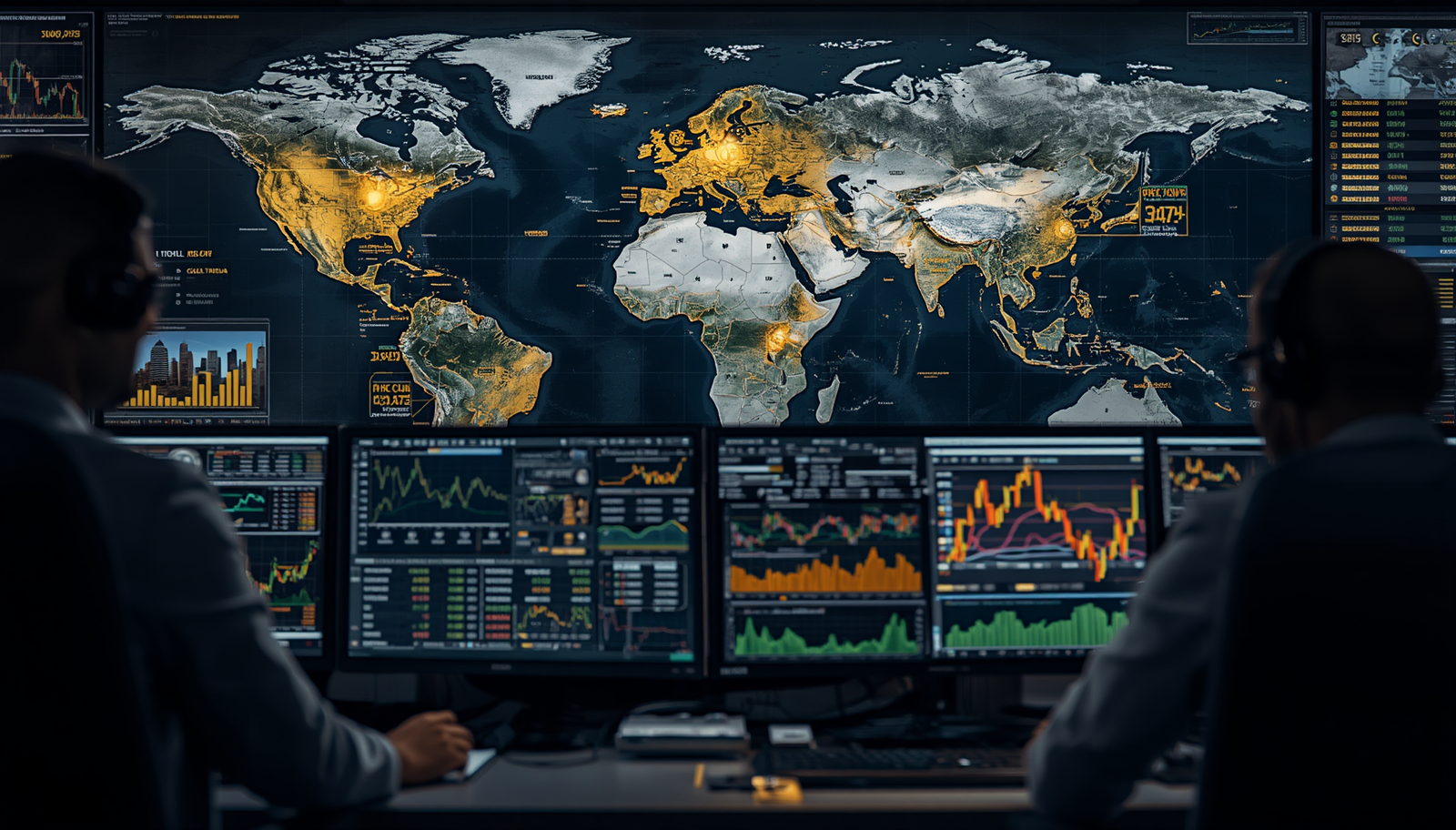
Gold and silver have been valuable for thousands of years, and they continue to play an important role in modern financial markets. Investors often turn to these precious metals when economic or political conditions become uncertain.
Although factors such as inflation, interest rates, supply, and demand all influence their prices, geopolitical events can trigger some of the sharpest moves in the precious metals market.
Wars, trade disputes, economic sanctions, political instability, and international tensions can quickly change investor sentiment. When uncertainty rises, investors often reduce exposure to riskier assets and look for places to protect their capital. Gold and silver can benefit from this shift.
Understanding the relationship between geopolitical events and precious metals can help investors make more informed decisions instead of reacting emotionally to breaking headlines.
Understanding Geopolitical Risk
Geopolitical risk is the uncertainty created by political events that could affect economies, financial markets, or relationships between countries.
It can come from military conflicts, elections, diplomatic disputes, trade restrictions, sanctions, political instability, or major changes in government policy.
Markets generally don’t respond well to uncertainty because it becomes harder for investors to estimate economic growth, corporate earnings, interest rates, and future business conditions.
When uncertainty increases, investors often become more defensive. Money may move away from riskier investments such as stocks and toward assets that have historically been viewed as stores of value.
Gold is usually one of the first assets investors consider in these situations, while silver can also benefit depending on broader economic conditions.
Why Gold Is Considered a Safe-Haven Asset
Gold has maintained its reputation as a safe-haven asset through many financial and political crises.
Unlike a currency issued by a particular government, gold isn’t directly tied to the financial health or monetary policy of a single country. It has also been used as a store of value for centuries.
During periods of geopolitical stress, investors may increase their gold exposure because they want an asset that can provide diversification when other markets become unstable.
As demand increases, gold prices can rise.
This behavior has appeared repeatedly during periods of war, financial turmoil, political instability, and significant economic uncertainty.
Silver’s Dual Role in the Economy
Silver is somewhat different from gold because it has both monetary and industrial uses.
It’s used in electronics, solar technology, medical applications, automobiles, manufacturing, and several other industries.
That means silver isn’t driven solely by investor demand.
If geopolitical tensions increase concerns about global economic growth or industrial production, silver can face pressure from weaker industrial demand. On the other hand, if investors are buying silver while industrial demand remains strong, the metal can experience significant upward momentum.
This dual role is one reason silver can sometimes behave more dramatically than gold.
Armed Conflicts and Military Tensions
Military conflicts can have an immediate impact on financial markets.
When a major conflict begins or tensions escalate, investors may worry about energy supplies, international trade, supply chains, economic growth, and overall financial stability.
That uncertainty can increase demand for defensive assets.
Gold often responds strongly because investors tend to prioritize capital preservation during periods of serious geopolitical risk.
Silver can also rise during these periods, but its response may be less straightforward because industrial demand remains an important part of its valuation.
The severity and expected duration of the conflict can also influence how markets respond.
Political Instability and Elections
Political uncertainty doesn’t always involve military conflict.
Elections, leadership changes, constitutional disputes, unstable governments, and disagreements over economic policy can also affect financial markets.
Investors may become concerned about potential changes to taxation, government spending, regulation, trade policy, or monetary policy.
If uncertainty increases significantly, some investors may increase their exposure to gold as a defensive measure.
Silver can also benefit from increased investment demand, although industrial and economic expectations continue to influence its price.
Trade Disputes and Economic Sanctions
Trade conflicts can create another source of uncertainty for precious metals.
Tariffs, export restrictions, import controls, and economic sanctions can disrupt international supply chains and increase business costs.
Companies may delay investments because future economic conditions become less predictable. Investors may also become more cautious about industries and markets that are heavily exposed to international trade.
Gold can benefit from this defensive shift because it is often viewed as a way to diversify against economic and political uncertainty.
Silver’s reaction can be more mixed. If trade tensions reduce expectations for industrial production, silver may face pressure. However, strong investment demand can offset some of that weakness.
Currency Volatility
Geopolitical events can have a significant effect on currency markets.
Political instability or concerns about a country’s economy can weaken its currency as investors move capital into assets or currencies they consider safer.
Because gold and silver are generally priced in U.S. dollars, changes in the dollar can also influence their prices.
When a local currency loses value against the dollar, gold and silver can become more expensive for buyers in that country. At the same time, investors may see precious metals as an attractive way to protect purchasing power.
Currency movements therefore form an important part of the relationship between geopolitics and precious metals.
Inflation Expectations
Geopolitical tensions can sometimes contribute to inflation.
A conflict may disrupt energy supplies, transportation networks, or important supply chains. Higher energy and production costs can eventually put pressure on consumer prices.
When investors expect inflation to remain elevated, demand for assets that may help preserve purchasing power can increase.
Gold is often viewed as an inflation hedge, while silver can also benefit from inflationary conditions.
However, silver’s industrial role means its performance depends on more than inflation alone. Economic growth and manufacturing demand also play major roles.
Central Bank Buying
Central banks are important participants in the gold market.
During periods of increased geopolitical uncertainty, some central banks may increase their gold reserves as part of a broader effort to diversify their holdings.
Gold can provide central banks with an asset that isn’t directly dependent on another country’s currency or financial system.
Strong central-bank demand can support gold prices over longer periods and may reinforce its status as a strategic reserve asset.
Central banks generally don’t accumulate silver on the same scale, so this factor is much more important for gold than for silver.
Investor Psychology
Markets aren’t driven entirely by economic statistics.
Investor psychology can have a powerful influence, particularly during periods of uncertainty.
When fear increases, investors may quickly reduce exposure to riskier assets and move toward investments they believe offer greater protection.
This can cause gold and silver prices to move before the actual economic consequences of a geopolitical event become clear.
In other words, markets often react to expectations.
If investors believe a conflict could become more serious, they may begin buying precious metals before any major economic disruption occurs.
Don’t Focus Only on Geopolitics
Geopolitical events can be powerful market drivers, but they are only part of the story.
Interest rates, inflation, economic growth, mining production, industrial demand, currency movements, monetary policy, and investor positioning can all influence gold and silver prices.
For example, geopolitical tensions may push gold higher while rising interest rates create pressure in the opposite direction.
This is why investors should consider several factors rather than assuming that every geopolitical crisis will automatically result in a sustained rally in precious metals.
A Long-Term Perspective
Geopolitical headlines can create dramatic short-term price movements, but long-term investors should be careful about making emotional decisions based on breaking news.
Markets can react aggressively at first and then reverse as investors receive more information.
Instead of trying to predict every political event, investors may find it more useful to focus on diversification, risk management, and their long-term financial objectives.
Gold and silver can play a role in a diversified portfolio because their price behavior can differ from traditional assets during certain market conditions.
Gold vs. Silver During Geopolitical Crises
Gold generally has the stronger safe-haven reputation.
During periods of severe geopolitical uncertainty, investors often turn to gold first because of its long history as a store of value and its role in central-bank reserves.
Silver can also benefit from safe-haven demand, but its industrial exposure makes its price more sensitive to economic growth expectations.
This means gold may behave more defensively during major crises, while silver can experience larger swings when investment demand and industrial demand move in the same direction.
For investors considering both metals, understanding this difference is important.
Investment Considerations in 2026
Geopolitical uncertainty remains an important consideration for financial markets in 2026. Changes in international relationships, trade policies, military tensions, technological competition, and monetary policy can all influence investor sentiment.
Rather than attempting to predict every geopolitical development, investors can focus on building portfolios that are designed to withstand different market environments.
For some investors, gold and silver can serve as part of that broader diversification strategy.
The key is to avoid treating precious metals as a guaranteed solution to every market problem. Their prices can rise sharply, but they can also experience significant corrections.
Final Thoughts
Geopolitical events can have a powerful influence on gold and silver prices because they change investor expectations, risk appetite, currency conditions, inflation outlooks, and economic forecasts.
Gold usually has the stronger safe-haven response, while silver has a more complicated relationship with geopolitical events because of its important industrial role.
Understanding these differences can help investors interpret price movements more effectively.
The most important lesson is to look beyond the headline. Instead of assuming that every conflict or political crisis will automatically push precious metals higher, consider interest rates, inflation, currency movements, economic growth, industrial demand, and investor sentiment as well.
A disciplined and diversified approach can help investors navigate geopolitical uncertainty without making impulsive decisions based on short-term market reactions.