
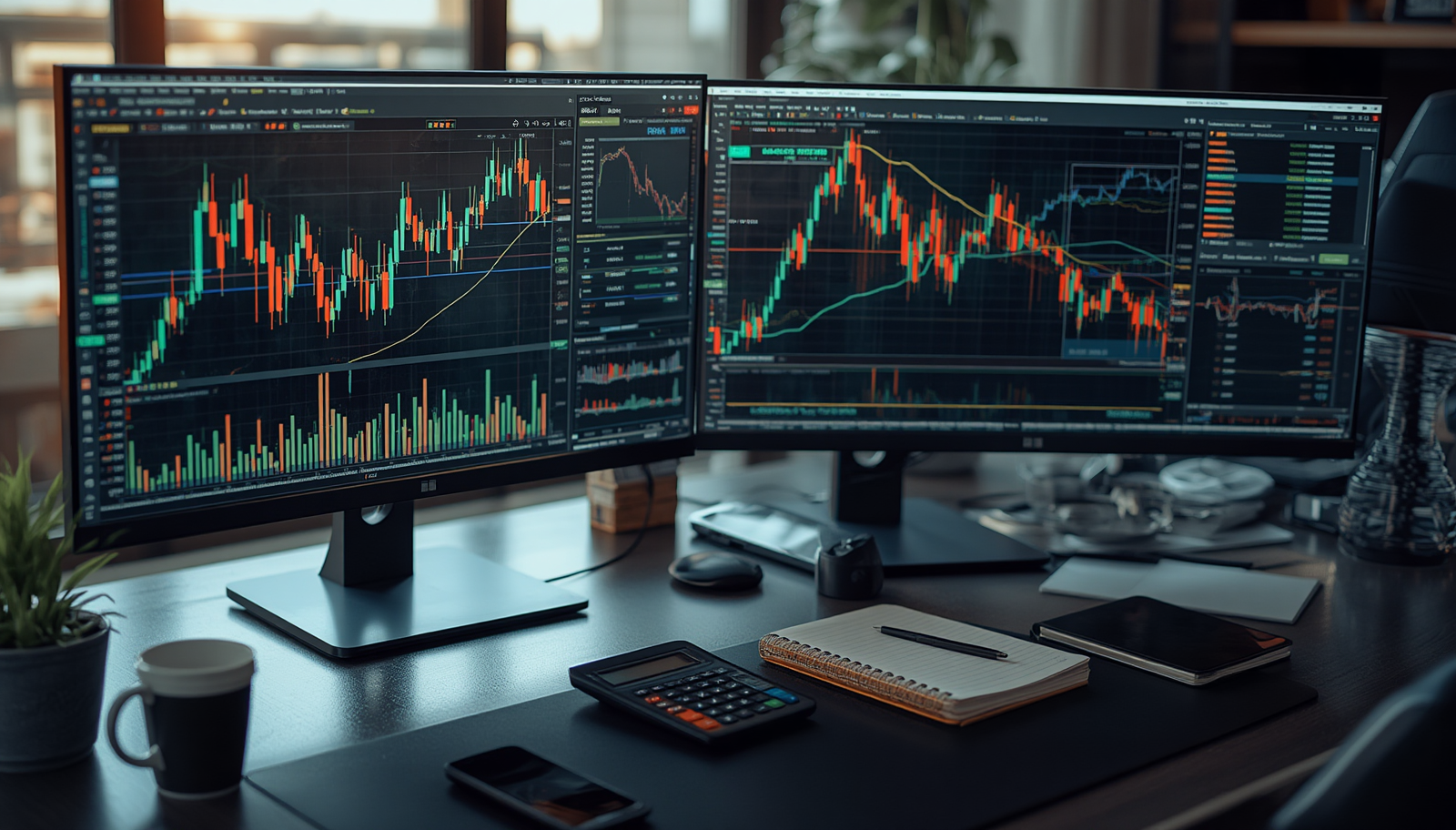
The cryptocurrency market can offer exciting opportunities, but those opportunities come with plenty of risk. Prices can move sharply within minutes, sometimes because of breaking news, changing market sentiment, regulatory developments, or large transactions. While many traders spend most of their time looking for the next profitable setup, experienced traders understand that long-term success is not just about finding good entries. It is also about knowing how to protect capital when trades go wrong.
That is where risk management becomes essential.
A solid risk management strategy can help traders limit losses, avoid emotional decisions, and stay in the market long enough to benefit from future opportunities. Even highly experienced traders have losing trades. The difference is that they manage those losses carefully instead of allowing one bad position to seriously damage their portfolio.
Whether you trade Bitcoin, Ethereum, or smaller altcoins, learning how to manage risk is one of the most important skills you can develop.
Why Risk Management Matters in Crypto Trading
Cryptocurrency is known for its high volatility. Prices can move several percentage points in a short period, sometimes without much warning. Market sentiment, economic data, regulatory announcements, technological developments, and large institutional transactions can all influence prices.
New traders often focus heavily on making money and give much less attention to what could go wrong. That mindset can quickly become expensive.
Risk management provides a framework for dealing with uncertainty. Its purpose is not to prevent every loss, because that is impossible. Instead, the goal is to make sure that one unsuccessful trade does not cause serious damage to your overall capital.
A trader who protects their account has a much better chance of staying active through both winning and losing periods.
Only Trade With Money You Can Afford to Lose
One of the simplest but most important rules of cryptocurrency trading is to avoid putting essential money at risk.
Using money needed for rent, bills, emergencies, or other important expenses can create enormous emotional pressure. Borrowing money to trade can make that pressure even worse.
When traders are worried about losing money they cannot afford to lose, they may close positions too early, ignore their own rules, or take unnecessary risks in an attempt to recover losses.
Trading should never put your basic financial stability at risk. Keeping your trading capital separate from essential savings can make it easier to remain calm when the market becomes unpredictable.
Decide Your Risk Before Entering a Trade
Good risk management starts before a position is opened.
Before placing a trade, determine how much you are willing to lose if your analysis turns out to be wrong. Having this number in mind makes it much easier to remain disciplined once the market starts moving.
Many experienced traders choose to risk only a small portion of their total trading capital on an individual position. The exact amount depends on the trader’s strategy, account size, and personal circumstances.
The important point is consistency. If every trade carries a manageable level of risk, a series of losses is less likely to seriously damage the account.
Use Stop-Loss Orders Wisely
A stop-loss order can help limit losses by automatically closing a position when the market reaches a predetermined price.
Without a clear exit point, traders may hold onto losing positions while convincing themselves that the price will eventually recover. In cryptocurrency markets, however, a temporary decline can sometimes turn into a much larger move.
Setting a stop-loss before entering a trade creates a clear boundary for the trade. It also reduces the temptation to make emotional decisions when prices move quickly.
However, stop-loss placement should be based on the market structure and trading strategy rather than being placed randomly close to the entry price.
Pay Attention to Position Size
Position sizing is another major part of risk management.
A common mistake among beginners is putting too much capital into a single trade because they are convinced the opportunity is almost certain to succeed. Unfortunately, there is no such thing as a guaranteed trade in cryptocurrency markets.
A better approach is to determine position size according to your account balance, acceptable risk, and planned stop-loss level.
This means that even when the market moves against you, the resulting loss remains within a level you can realistically handle.
Proper position sizing may not produce spectacular gains overnight, but it can make your trading strategy much more sustainable.
Diversify Carefully
Putting all your money into one cryptocurrency exposes your portfolio to the risks associated with that single asset.
Diversification can help spread exposure across different cryptocurrencies and market sectors. Some investors may combine established digital assets with carefully researched smaller projects rather than relying entirely on one coin.
However, diversification does not mean buying dozens of cryptocurrencies simply for the sake of having more assets. Too many positions can make a portfolio difficult to monitor and may reduce the impact of your strongest investment ideas.
The goal should be thoughtful diversification rather than simply owning as many assets as possible.
Be Careful With Leverage
Leverage can increase both potential gains and potential losses.
It allows traders to control a larger position with a smaller amount of their own capital, which can make relatively small market movements have a much larger impact on their account.
This is especially dangerous in cryptocurrency markets because sudden price swings are common. A position that looks manageable under normal conditions can quickly become difficult to control when volatility increases.
Beginners should be particularly cautious with leverage. Using lower leverage or avoiding it entirely can significantly reduce the possibility of large, rapid losses.
Keep Your Emotions Under Control
Risk management is not only about numbers. Psychology plays an equally important role.
Fear can cause traders to close positions too quickly, while greed may encourage them to hold onto trades longer than planned or take on excessive risk.
Losses can create another problem: revenge trading. After losing money, a frustrated trader may immediately open another position in an attempt to recover the loss. This often leads to even more emotional decisions.
A disciplined trader accepts that losses are part of the process. Instead of trying to win back money immediately, they step back, review what happened, and wait for the next suitable opportunity.
Look for a Sensible Risk-to-Reward Ratio
Before entering a trade, consider whether the potential reward is worth the amount being risked.
For example, risking a large amount of capital for a relatively small potential gain may not make sense, especially if the probability of success is uncertain.
A favorable risk-to-reward setup gives traders more room to remain profitable over a series of trades, even when some positions result in losses.
This does not mean every trade needs to meet the same fixed ratio. Market conditions and trading strategies differ. What matters is evaluating the potential downside and upside before committing capital.
Keep a Detailed Trading Journal
A trading journal can reveal patterns that are difficult to notice while actively trading.
Record details such as why you entered a position, where you planned to exit, how much you risked, the final result, and what the market was doing at the time.
It can also be useful to record your emotional state. Were you confident, nervous, impatient, or influenced by a recent loss?
Reviewing this information regularly can reveal recurring mistakes. Perhaps you trade too frequently after losses, enter positions because of social media hype, or move stop-losses when a trade goes against you.
Identifying these habits gives you an opportunity to correct them.
Stay Aware of Market Developments
Cryptocurrency markets can react quickly to major events.
Regulatory announcements, economic reports, exchange problems, security incidents, technological upgrades, institutional activity, and major industry news can all affect market conditions.
Staying informed can help traders understand why volatility is increasing and whether their existing positions still fit their strategy.
At the same time, there is a difference between staying informed and reacting to every headline. Not every piece of news deserves an immediate trade. Combining fundamental information with technical analysis and risk management usually provides a more balanced approach.
Don’t Chase the Market
Chasing the market is one of the easiest ways to make an emotional trading decision.
A cryptocurrency may suddenly rise and attract widespread attention. Seeing the price move rapidly can create FOMO, making traders feel that they have to buy immediately before the opportunity disappears.
The same thing can happen during a crash. Watching prices fall sharply may convince investors to sell simply because everyone else appears to be doing the same.
Experienced traders understand that markets constantly create new opportunities. Missing one trade is usually far less damaging than entering a position without a clear plan.
Waiting for a setup that matches your strategy can be much more valuable than trying to catch every price movement.
Protect Your Trading Capital
Capital is the foundation of your trading career.
Once a significant portion of your account has been lost, recovering it becomes increasingly difficult. For that reason, protecting capital should come before trying to maximize returns.
This means avoiding oversized positions, controlling leverage, using appropriate exits, and refusing to take unnecessary risks simply because the market looks attractive.
The objective is to remain financially prepared for future opportunities rather than trying to make every trade profitable.
Keep Improving Your Trading Skills
Markets never remain exactly the same. Strategies that work well in one environment may perform differently when volatility, liquidity, or investor sentiment changes.
Successful traders continue learning about technical analysis, market psychology, blockchain developments, macroeconomic conditions, and historical market behavior.
Reviewing your own performance is equally important. Look at both successful and unsuccessful trades and ask what you could have done better.
Over time, this combination of education, experience, and self-evaluation can help you become more disciplined and adaptable.