
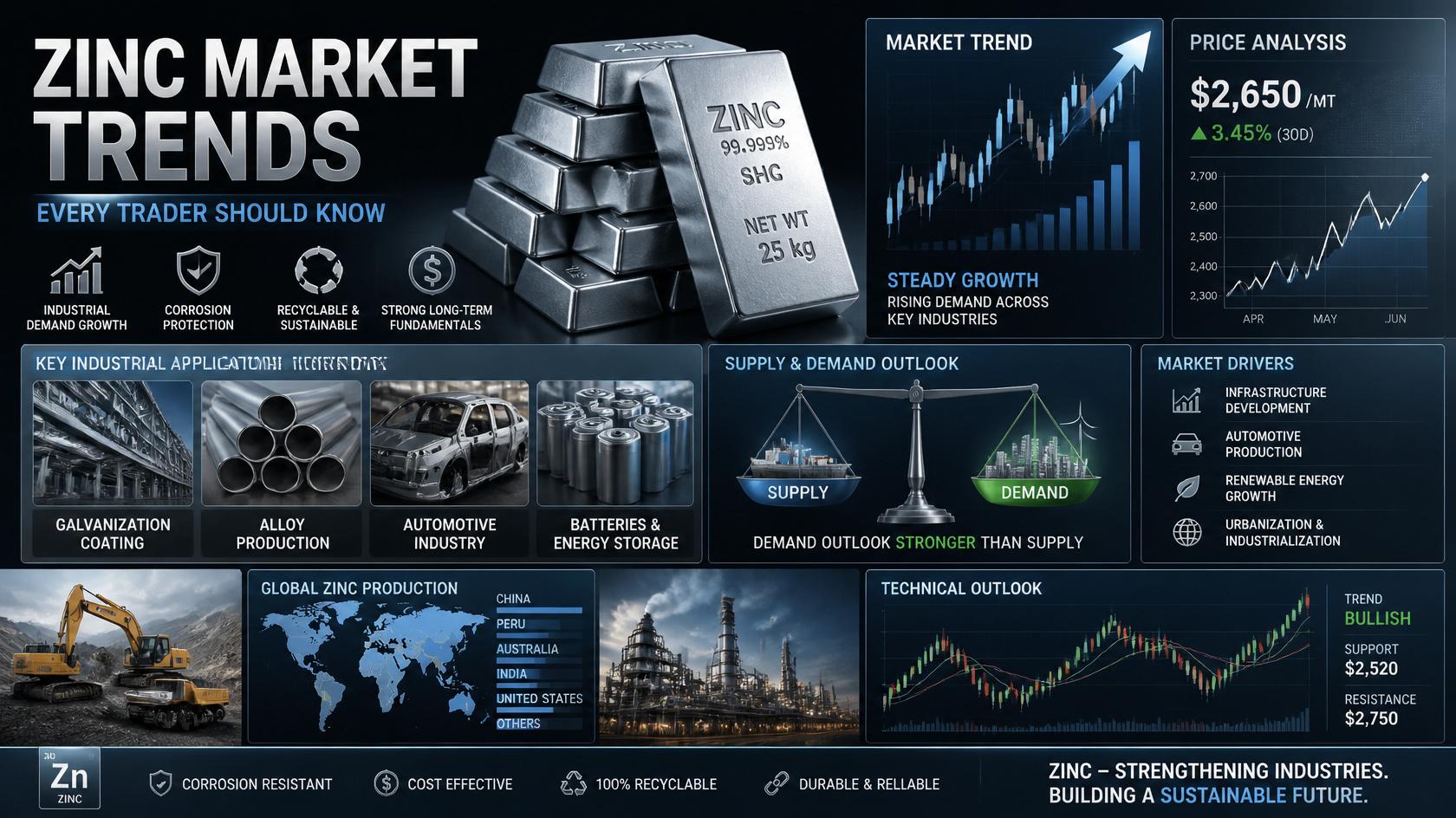
Zinc may not receive as much attention as gold or silver, but it is one of the most important industrial metals in the global economy. It plays a major role in construction, manufacturing, transportation, infrastructure, and renewable energy.
Much of zinc’s importance comes from its ability to protect steel from corrosion. This makes it an essential material for everything from bridges and buildings to vehicles and power infrastructure.
In 2026, the zinc market is being influenced by several forces at once. Industrial demand remains important, while infrastructure spending, renewable energy projects, electric vehicles, changing supply conditions, and geopolitical developments are all shaping the market.
For traders, understanding these factors can provide a better picture of what may influence zinc prices and where potential opportunities could emerge.
This guide explores the major zinc market trends traders should understand in 2026, along with the risks that can make this commodity particularly volatile.
Understanding the Importance of Zinc
The largest use of zinc is in galvanization, a process that protects steel from rust and corrosion.
Galvanized steel is used in bridges, buildings, automobiles, railways, pipelines, power transmission systems, and many other industrial applications.
Because so much infrastructure depends on galvanized steel, zinc demand is closely connected to construction, manufacturing, and overall economic activity.
This makes zinc different from precious metals such as gold, where investment demand plays a much larger role. Zinc gets much of its value from its practical use across the industrial economy.
For traders, this industrial connection makes zinc an interesting metal to watch when assessing global economic conditions.
Global Zinc Demand Continues to Expand
Industrial demand remains one of the most important factors influencing zinc prices in 2026.
Developing economies continue investing in roads, housing, commercial buildings, transportation systems, and electrical infrastructure. At the same time, developed countries are spending money on replacing and upgrading older infrastructure.
The automotive industry is another important source of demand because manufacturers use large amounts of galvanized steel.
Even as vehicle technology changes, the need for durable and corrosion-resistant steel remains.
With urbanization continuing in many parts of the world, zinc consumption is likely to remain closely tied to construction and industrial activity.
Infrastructure Spending Supports Long-Term Growth
Infrastructure investment is playing an important role in the zinc market.
Governments are continuing to invest in highways, bridges, airports, railways, ports, electrical systems, and other major projects designed to improve infrastructure and support economic activity.
These projects require large quantities of steel, much of which needs protection against corrosion.
That creates an indirect but important connection between infrastructure spending and zinc demand.
For traders, keeping an eye on major government infrastructure programs can provide useful clues about potential future demand for the metal.
Renewable Energy Creates New Opportunities
The transition toward cleaner energy is creating another source of industrial demand for zinc.
Wind turbines, solar installations, battery-storage projects, electrical transmission networks, and other energy infrastructure require durable steel components.
Many of these components need protection from corrosion, particularly when they are exposed to harsh outdoor environments.
As countries continue expanding renewable energy capacity, the construction of new energy infrastructure could support demand for zinc.
This gives the metal exposure to a long-term trend that goes beyond traditional construction and manufacturing.
Supply Challenges Continue Influencing Prices
Demand is only one side of the zinc market. Supply conditions can have an equally important impact on prices.
Mining companies face challenges such as rising production costs, labor shortages, environmental requirements, and declining ore quality.
Some older mines may produce less metal over time, while developing new mining projects can require significant investment, lengthy approval processes, and regulatory support.
Unexpected events can create additional supply pressure. Severe weather, equipment problems, labor disputes, and geopolitical tensions can all disrupt mining or transportation.
When available supply struggles to keep pace with demand, zinc prices can come under upward pressure.
China Remains the Largest Market
China plays a major role in the global zinc market.
As one of the world’s largest producers and consumers of zinc, changes in Chinese economic activity can have a noticeable effect on global prices.
Manufacturing activity, construction, property development, industrial production, government stimulus, and export conditions can all influence Chinese zinc demand.
For this reason, traders often pay close attention to Chinese economic data when assessing the outlook for the metal.
A stronger industrial environment can support zinc demand, while weaker manufacturing or construction activity can have the opposite effect.
The United States and Infrastructure Investment
The United States is another important source of zinc demand.
Investment in transportation networks, energy infrastructure, manufacturing facilities, electrical grids, and public infrastructure requires substantial quantities of steel and other industrial materials.
Efforts to strengthen domestic manufacturing and expand energy infrastructure can also support demand for industrial metals.
For traders focused on North American markets, U.S. manufacturing data, construction spending, infrastructure investment, and broader economic indicators can provide useful signals about potential zinc demand.
Artificial Intelligence Is Increasing Metal Demand
Artificial intelligence may seem far removed from the zinc market, but the connection is becoming easier to see.
The rapid expansion of AI requires large data centers, semiconductor manufacturing facilities, electrical systems, cooling infrastructure, and new power capacity.
Building these facilities requires significant amounts of construction materials, including steel.
Because zinc is widely used to protect steel from corrosion, increased construction of AI-related infrastructure can indirectly contribute to zinc demand.
Zinc is not a primary component of AI processors themselves, but it can benefit from the physical infrastructure being built to support the expanding digital economy.
Electric Vehicles and Zinc Consumption
The automotive industry is changing rapidly as electric vehicles become more common.
However, the shift from internal-combustion engines to electric power does not eliminate the need for steel.
Vehicle frames, safety structures, body components, and other parts continue to rely heavily on steel, including galvanized steel in many applications.
As electric vehicle production expands, zinc demand can therefore continue benefiting from automotive manufacturing even as the technology behind vehicles changes.
This gives zinc another long-term connection to the global transportation industry.
Global Economic Growth Remains a Key Driver
Zinc is deeply connected to industrial activity, which means its market can often reflect the broader health of the global economy.
When economies are growing, manufacturers tend to increase production, construction activity can accelerate, and infrastructure investment can rise. These conditions generally support zinc demand.
When economic growth slows, however, companies may reduce production and delay construction or infrastructure projects. That can weaken demand and put pressure on prices.
Traders should therefore pay attention to manufacturing activity, construction spending, industrial production, business investment, and other economic indicators when evaluating zinc market conditions.
Price Volatility Creates Trading Opportunities
Zinc can experience significant price swings.
Prices can react quickly to changes in supply expectations, warehouse inventories, economic data, central bank decisions, currency movements, and geopolitical developments.
For active traders, this volatility can create opportunities.
But the same volatility can also lead to substantial losses if positions are too large or market conditions change unexpectedly.
That makes disciplined risk management particularly important when trading zinc.
Inventory Levels Matter
Zinc inventories can provide useful information about the balance between supply and demand.
When inventories decline, it can indicate strong consumption, restricted supply, or both. Depending on the broader market environment, falling inventories can support higher prices.
Rising inventories may suggest that production is outpacing demand or that industrial consumption is weakening.
For this reason, professional traders often monitor warehouse inventory data alongside production and consumption figures to better understand market conditions.
Inflation and Interest Rates
Macroeconomic conditions can also influence zinc prices.
Periods of healthy economic growth can support demand for industrial commodities, while moderate inflation may coincide with continued infrastructure and business spending.
On the other hand, higher interest rates can make borrowing more expensive. This can slow construction, manufacturing investment, and infrastructure projects, potentially reducing demand for industrial metals.
Central bank policy is therefore another factor traders should consider when evaluating the zinc market in 2026.
Risk Management for Zinc Traders
Zinc can offer interesting trading opportunities, but commodity markets carry significant risks.
Unexpected economic weakness, government policy changes, environmental regulations, mining disruptions, geopolitical developments, and currency movements can all affect prices.
Traders should avoid relying on a single indicator when making decisions.
Combining fundamental analysis with technical analysis can provide a broader view of market conditions. Position sizing is equally important because even a well-researched trade can move against expectations.
The goal is not simply to find profitable opportunities but also to protect capital when the market moves unexpectedly.
Long-Term Outlook for Zinc
The long-term outlook for zinc is supported by several structural trends.
Infrastructure modernization is continuing in both developed and emerging economies. Renewable energy projects are creating additional demand for durable steel and electrical infrastructure. Electric vehicle production is expanding, while artificial intelligence is driving large investments in data centers and related infrastructure.
Population growth and urbanization are also supporting construction activity in many parts of the world.
These trends do not guarantee higher zinc prices, as supply growth, economic cycles, inventories, and geopolitical events can all change the market balance.
However, they highlight why zinc remains an important industrial metal to monitor in 2026.
For traders, the key is to follow the relationship between supply and demand while also watching Chinese and U.S. economic activity, infrastructure spending, inventory levels, interest rates, and major developments in the mining industry.
Zinc may not always make the headlines like gold or silver, but its role in the physical economy makes it a commodity worth keeping on the radar.