
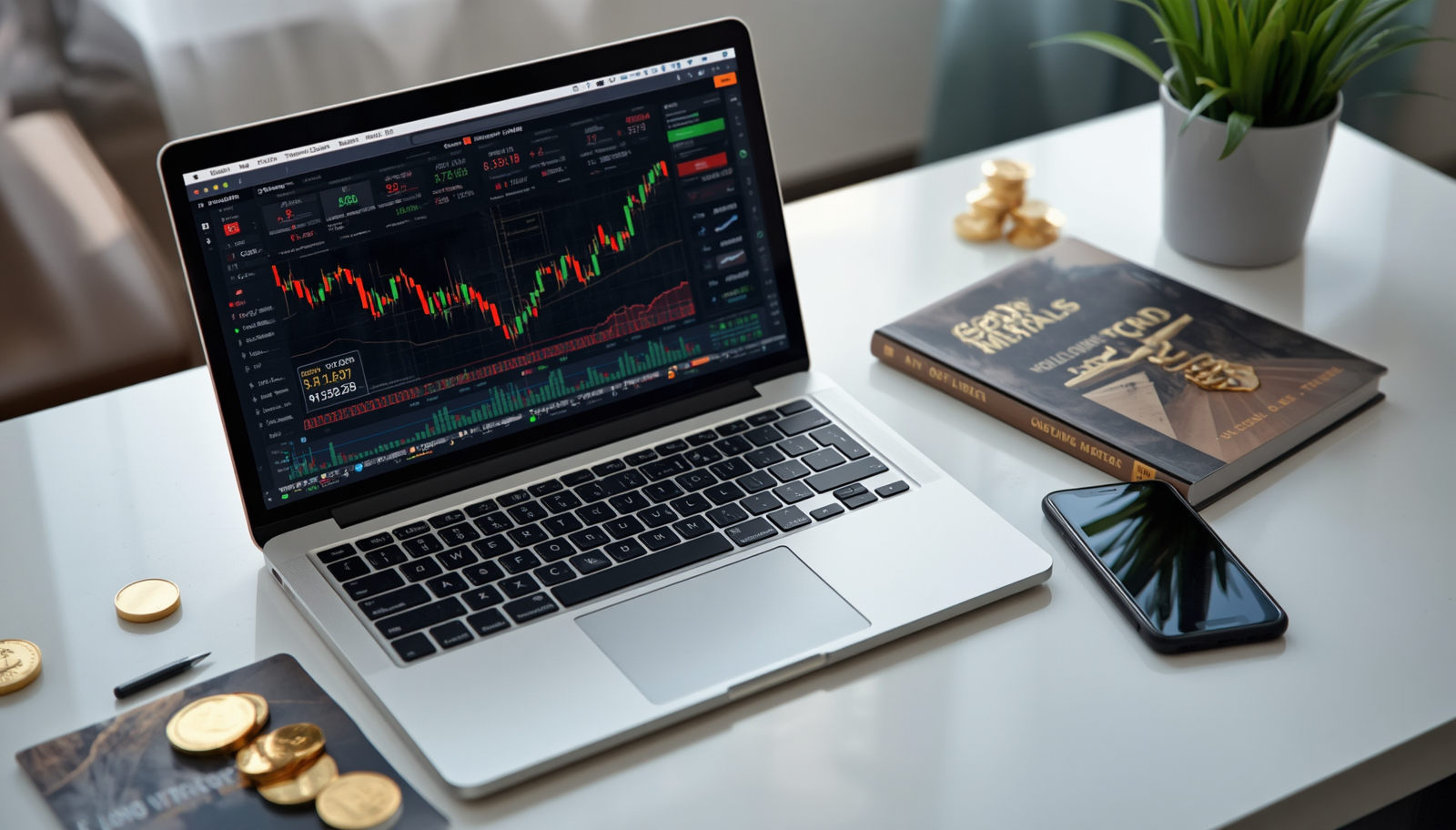
Gold and silver have been trusted stores of value for centuries, and they continue to attract traders and investors around the world. In 2026, modern trading technology has made access to precious metals markets easier than ever. With online platforms offering live prices, advanced charts, market news, and analytical tools, investors can monitor gold and silver prices and place trades from almost anywhere.
People trade these metals for different reasons. Some want to diversify their portfolios, others see them as a way to protect wealth during periods of inflation or economic uncertainty, while active traders look for opportunities created by short-term price movements.
Whatever your goal, understanding what moves gold and silver prices and how these markets work is essential before putting capital at risk.
This guide explains the basics of gold and silver trading, the factors that influence their prices, popular analysis methods, common risks, and practical ways beginners can approach the market.
What Is Gold and Silver Trading?
Gold and silver trading involves buying or selling these precious metals based on expected changes in their prices.
Investors can gain exposure in several ways. Some purchase physical gold or silver in the form of coins and bullion, while others use financial products linked to precious metal prices.
Unlike stocks, where value is closely connected to the performance of a particular company, precious metal prices are influenced by a much broader range of factors. Global supply and demand, economic conditions, interest rates, currency movements, industrial consumption, and investor sentiment can all affect prices.
Gold and silver are also commonly viewed as safe-haven assets. During periods of financial stress or uncertainty, some investors increase their exposure to precious metals as part of a broader diversification strategy.
Why Gold and Silver Are Valuable
Gold and silver have remained valuable for generations because they are relatively scarce, durable, and widely recognized across the world.
Gold is particularly popular as a store of wealth. Central banks hold gold reserves, while investors often use the metal as part of a long-term strategy for preserving purchasing power.
Silver has many of the same investment characteristics as gold, but it has an additional role in the global economy. The metal is widely used in electronics, solar technology, medical equipment, automotive components, and other industrial applications.
This industrial connection gives silver a unique price dynamic. Its value can be influenced not only by investor demand but also by changes in manufacturing and technological activity.
How Gold and Silver Markets Work
Gold and silver prices are constantly changing as buyers and sellers interact in global markets.
Trading takes place through major commodity exchanges and electronic financial platforms, allowing prices to move throughout most of the trading week.
Market prices can react quickly to economic reports, central bank decisions, inflation expectations, geopolitical events, currency movements, and changes in investor sentiment.
Online trading platforms have made it possible for individuals to follow these price movements in real time and respond to market developments quickly.
However, easy access does not mean easy profits. Understanding market behavior and managing risk remain essential.
What Moves Gold Prices?
Gold prices can respond to a wide range of economic and financial factors.
Inflation
Gold is often viewed as a potential hedge against inflation. When investors become concerned that rising prices will reduce the purchasing power of cash, demand for gold may increase.
The relationship is not always straightforward, however. Gold can respond differently depending on real interest rates, currency movements, and overall investor expectations.
Interest Rates
Interest rates can have a significant influence on gold.
When interest rates rise, assets that generate interest income may become more attractive compared with an asset such as gold, which does not pay interest.
Changes in expectations about future central bank policy can therefore cause gold prices to move even before an actual rate decision takes place.
The US Dollar
Gold is generally priced in US dollars, making currency movements particularly important.
When the dollar strengthens, gold can become more expensive for buyers using other currencies, which may put pressure on demand. A weaker dollar can have the opposite effect.
The relationship is not guaranteed, but traders often watch the dollar closely when analyzing gold.
Geopolitical and Economic Uncertainty
Periods of political tension, financial instability, or economic uncertainty can increase demand for assets perceived as defensive.
Gold often attracts attention during such periods because of its long history as a store of value.
What Moves Silver Prices?
Silver is influenced by many of the same factors as gold, but industrial demand gives it another important source of price pressure.
Silver is used in solar panels, electronics, electric vehicles, medical equipment, and various manufacturing processes.
When industrial activity expands, demand for silver may increase. On the other hand, a significant economic slowdown can reduce industrial consumption and place pressure on prices.
Silver can also experience larger price swings than gold. That can create attractive opportunities for active traders, but it also increases the potential for losses.
Gold vs. Silver: Which Is Better?
There is no universal winner between gold and silver. The better choice depends on an investor’s objectives and tolerance for volatility.
Gold is generally considered the more established store of value and tends to experience smaller price swings than silver.
Silver is often more volatile and has a stronger connection to industrial demand. This can create greater price movement and potentially more trading opportunities, but the additional volatility also brings additional risk.
Some investors choose to hold both metals rather than relying entirely on one. Combining them can provide exposure to the different characteristics of each market.
Benefits of Trading Gold and Silver
Precious metals can offer several potential advantages as part of a diversified investment approach.
One major benefit is diversification. Gold and silver do not always move in the same way as stocks, bonds, or other financial assets, which may help spread portfolio risk.
Precious metals can also attract demand during periods of economic uncertainty and changing inflation expectations.
Their global popularity contributes to active markets, while the availability of different trading instruments allows investors to choose an approach that matches their objectives.
Gold and silver can be used for both long-term investment strategies and shorter-term trading.
Risks of Gold and Silver Trading
Despite their reputation as defensive assets, gold and silver are not risk-free investments.
Prices can change quickly in response to interest rate expectations, economic reports, currency movements, geopolitical developments, and changes in investor sentiment.
Silver can be particularly volatile, meaning price movements may be larger than many beginners expect.
Short-term traders also face additional risks, including transaction costs, poor timing, leverage, and emotional decision-making.
Before trading, investors should understand how much capital they can afford to risk and how a significant price movement could affect their overall portfolio.
Using Technical Analysis
Technical analysis is widely used by precious metals traders.
Traders study price charts, support and resistance levels, trend lines, moving averages, candlestick formations, and momentum indicators to identify potential opportunities.
For example, a trader might look for a breakout above an important resistance level or wait for price to pull back toward a previously established support zone.
Technical analysis can help with trade timing, but it does not guarantee that a market will move as expected.
Using several forms of confirmation can provide more context than relying on a single indicator.
Fundamental Analysis
Fundamental analysis focuses on the economic conditions that can influence precious metal prices.
Gold and silver traders may follow inflation data, interest rate decisions, central bank policies, employment reports, economic growth, currency movements, mining production, and industrial demand.
For silver, industrial consumption is particularly important because the metal plays a major role in several manufacturing and technology industries.
Investors can combine fundamental and technical analysis to develop a broader view of the market. Fundamental research can help explain why prices may be moving, while technical analysis can help identify potential entry and exit areas.
Risk Management
Protecting capital should be a priority for every precious metals trader.
Before opening a position, decide how much risk you are willing to accept if the trade moves against you.
Position sizing should be appropriate for your account and overall portfolio. Taking an oversized position simply because a market appears attractive can create unnecessary financial pressure.
Stop-loss orders can help limit losses when used appropriately, while diversification can reduce dependence on a single asset.
The objective is not to avoid every losing trade. Losses are an unavoidable part of trading. The goal is to ensure that individual losses remain manageable.
Long-Term Investing vs. Short-Term Trading
Gold and silver can be approached in very different ways.
Long-term investors may hold precious metals for years, focusing on wealth preservation, inflation expectations, currency trends, and broader economic conditions.
Short-term traders have a different objective. They attempt to benefit from price movements that may develop over minutes, hours, or days. These traders often rely more heavily on technical analysis, market momentum, and short-term price patterns.
Neither approach is automatically better. What matters is choosing a strategy that matches your goals, schedule, knowledge, and ability to manage risk.
Common Mistakes Beginners Make
One common mistake is buying precious metals simply because prices have already risen sharply. A strong recent performance does not guarantee that the trend will continue.
Another problem is reacting emotionally to short-term declines. Markets rarely move in a straight line, and temporary pullbacks do not necessarily mean that a long-term investment thesis has failed.
Overtrading is another issue. Constantly opening and closing positions can increase costs and make emotional decision-making more likely.
Beginners should also avoid putting too much capital into a single trade. A disciplined approach to position sizing can help protect an account during unexpected market movements.
Technology and Precious Metals Trading
Technology has dramatically changed how investors access gold and silver markets.
Today’s trading platforms can provide live prices, advanced charting, economic calendars, customizable alerts, historical data, and mobile access.
Artificial intelligence and machine learning are also becoming increasingly common in financial analysis. These technologies can process large quantities of market data, identify patterns, and help generate alerts or analytical insights.
However, technology should be treated as a tool rather than a replacement for knowledge. Automated signals can be wrong, and no algorithm can eliminate market uncertainty.
Gold and Silver During Economic Uncertainty
Precious metals often attract increased attention when economic conditions become uncertain.
Inflation concerns, financial market volatility, geopolitical tensions, and changing expectations about monetary policy can all influence investor demand for gold and silver.
Gold in particular has a long-standing reputation as a defensive asset. Silver can also benefit from investment demand, although its industrial exposure means that its behavior may differ from gold.
Neither metal guarantees protection from losses. Their prices can fall even during periods of economic stress, which is why diversification and risk management remain important.
Building a Precious Metals Trading Strategy
A good strategy begins with a clear objective.
First, decide whether you are interested in long-term investing, swing trading, day trading, or a combination of approaches.
Next, determine how you will analyze the market. You might combine fundamental factors such as inflation and interest rates with technical tools such as moving averages, support and resistance, and price patterns.
Set clear rules for entering and exiting positions. Decide in advance how much you are willing to risk and where you will reduce or close a position if the market moves against you.
Keeping a trading or investment journal can also be valuable. Recording your decisions and results makes it easier to identify what is working and where improvements are needed.
The strongest strategies are usually those that traders can follow consistently rather than systems that depend on constantly predicting the market.
The Future of Gold and Silver Trading
Gold and silver are likely to remain important parts of global financial markets as investors continue to deal with changing economic conditions, monetary policy, technological development, and geopolitical uncertainty.
Silver could receive additional attention from growing demand for renewable energy, electronics, and other technologies that rely on the metal.
At the same time, advances in artificial intelligence, automated trading, and financial analytics will continue changing how investors research and trade precious metals.
Technology may make market analysis faster and more accessible, but the fundamentals of successful investing will remain familiar: understand the market, control risk, stay disciplined, and avoid making decisions based purely on emotion.t neither is guaranteed to produce profits. Prices can change quickly, and even experienced traders can get caught on the wrong side of a move.
For beginners, the best starting point is education. Learn what drives precious metal prices, understand the difference between technical and fundamental analysis, practice risk management, and develop a strategy that fits your financial objectives.
With patience and discipline, gold and silver can become useful components of a broader investment approach rather than simply short-term trading opportunities.